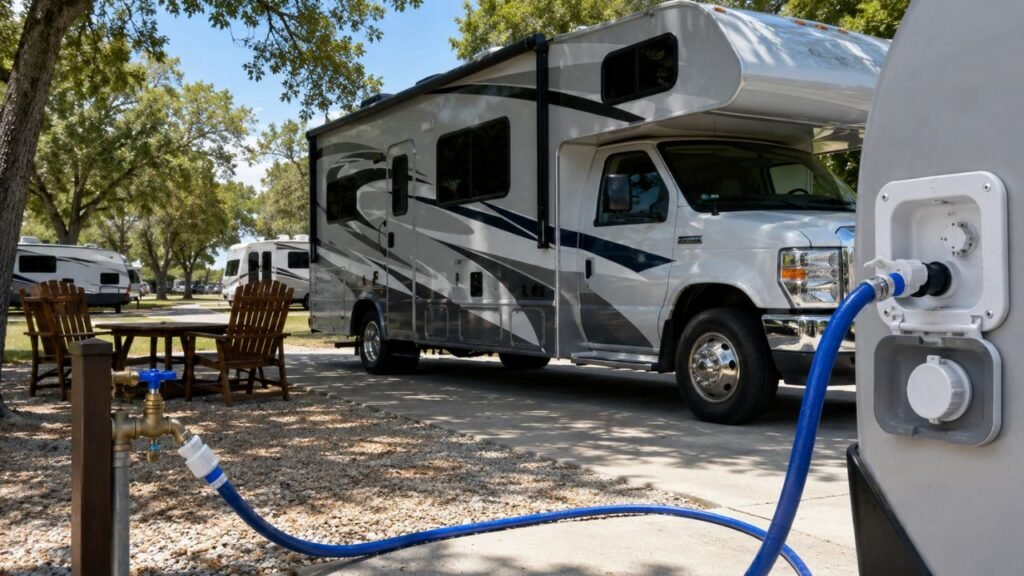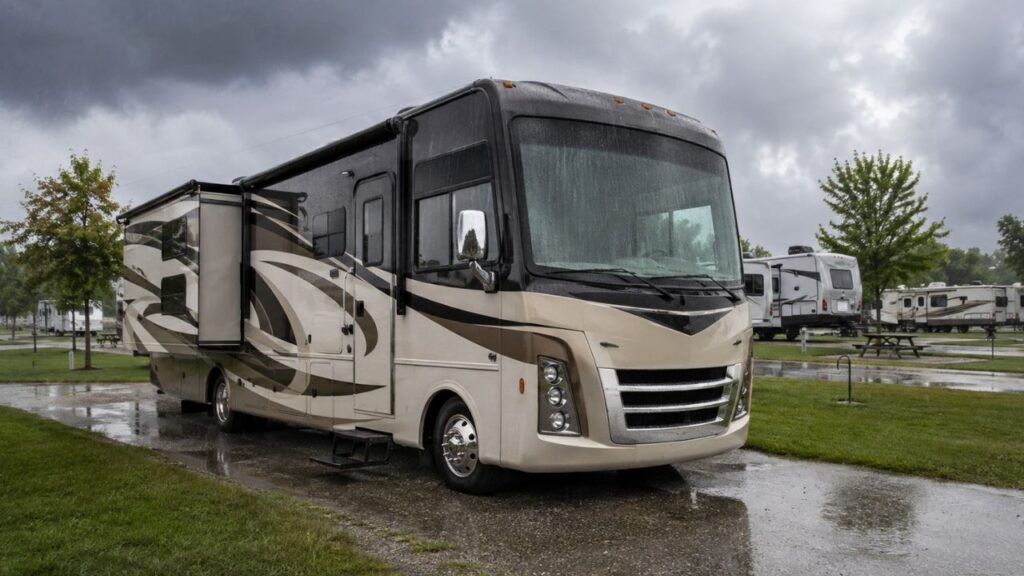
Yes, rain can cause an RV breaker to trip when moisture reaches an outlet, shore power connection, appliance, or damaged wire. The water may create a ground fault, short circuit, electrical leakage, or arcing connection.
In this guide, I’ll help you identify what tripped, locate the wet component, restore power safely, and prevent the problem from returning.
Key Takeaways
- Rain usually exposes an existing seal, wiring, or connection problem.
- Wet exterior outlets and shore power connections are common causes.
- The tripped device may be a breaker, GFCI, EMS, or pedestal breaker.
- Never repeatedly reset a breaker that immediately trips again.
- Burning smells, melted plugs, or shocks require professional inspection.
- Drying the RV may restore power but does not repair the leak.
- The permanent fix requires finding the moisture entry point.
Can Rain Really Cause an RV Breaker to Trip?
Rain can certainly cause an RV electrical circuit to shut down. However, the rain itself is usually not the original problem.
Instead, water reaches a connection that is already exposed or deteriorating. You may have a cracked outlet cover, failed roof seal, loose shore inlet, damaged cord, or corroded terminal.
Pure water does not conduct electricity particularly well. Rainwater, however, contains dirt, minerals, salts, and other contaminants. These substances allow current to travel where it should not.
A regular breaker usually trips because excessive current passes through the circuit. A wet connection may create a short circuit severe enough to trigger it.
A GFCI works differently. It detects tiny amounts of electricity escaping from the intended circuit. Even limited moisture can create enough leakage to trip a GFCI.
In either case, the device is trying to protect you. The interruption may feel inconvenient, but it could prevent shock, fire, or expensive equipment damage.
Which RV Electrical Device Is Actually Tripping?
RV owners often call every power interruption a breaker trip. However, several different protective devices can shut down your electricity.
Identifying the correct device will help you locate the fault much faster.
| Device That Trips | What It Detects | Common Rain-Related Cause | Typical Location |
| RV branch circuit breaker | Overload or short circuit | Water in one outlet, appliance, or wiring circuit | RV breaker panel |
| RV main breaker | Major short or excessive current | Wet shore inlet, transfer switch, or main wiring | RV breaker panel |
| GFCI outlet | Small current leakage to ground | Damp exterior outlet or connected appliance | Kitchen, bathroom, or exterior outlet |
| Campground pedestal breaker | Excess current or pedestal fault | Water inside the receptacle or plug connection | Campground pedestal |
| EMS or surge protector | Unsafe voltage, wiring, or power conditions | Wet pedestal, voltage changes, or wiring fault | Between the pedestal and RV cord |
| Inverter protection | Overload, short, or output fault | Moisture near inverter wiring or connected circuits | Electrical or storage compartment |
Check the pedestal first if all RV power suddenly disappears. Check your RV panel if only certain appliances or outlets stop working.
A GFCI may also cut power to several outlets at once. The wet outlet may not be the one containing the reset button.
Most Common Reasons an RV Breaker Trips During Rain
Most rain-related electrical problems begin around exposed connections and aging seals. Water may enter directly or travel through the RV before reaching the wiring.
Here are the areas I would inspect first.
Water Inside the Campground Power Pedestal
Campground pedestals remain outside through years of rain, heat, dust, and physical wear. Their covers and internal connections can deteriorate over time.
A damaged receptacle cover may allow rainwater inside. Wind-driven rain can also reach connections that appear protected during calmer weather.
Look for a loose receptacle, cracked cover, corrosion, scorch marks, or pooled water. Do not touch or open a suspicious pedestal.
The campground breaker may trip before your RV breaker responds. An electrical management system may also reject the pedestal power completely.
Contact campground staff when the pedestal appears wet or damaged. Trying another approved pedestal can help determine whether the fault belongs to the campsite.
A Wet Shore Power Plug or Cord End
Your shore power cord receives constant handling and outdoor exposure. The plug blades and internal terminals can loosen, corrode, or overheat.
Rain may enter around worn cord ends or poorly fitted adapters. Connections lying on wet ground are especially vulnerable.
Inspect the unplugged cord for green corrosion, darkened blades, cracked insulation, or melted plastic. A burned or loose plug should be replaced.
Do not continue using a cord simply because it dried. Internal corrosion and heat damage may remain hidden inside the plug.
Rain Entering the RV Shore Power Inlet
Detachable shore power inlets depend on covers, gaskets, screws, and sealant. Any failure around these parts may allow water inside.
Rain can run behind a loose inlet flange and reach the internal terminals. Water may also collect inside a cracked or poorly closing cover.
Look for staining, moisture, missing sealant, loose mounting screws, or a damaged gasket. Inspect only after disconnecting shore power completely.
If the inlet shows burning or corrosion, replacement is safer than cleaning it. Internal wiring inspection should be handled by a qualified technician.
Moisture Inside Exterior RV Outlets
Exterior outlets often power patio lights, televisions, grills, and other campsite equipment. Their weatherproof covers can crack or lose their seal.
A cover may protect an unused outlet but fail with a cord connected. Some older covers cannot close properly around a plug.
Outdoor kitchens and entertainment compartments may also contain regular outlets. Water entering these spaces can trip a shared GFCI circuit.
One wet exterior outlet may disable outlets inside your bathroom, kitchen, or bedroom. That happens because multiple receptacles may share one protective device.
Water Around Exterior Lights or Accessories
Porch lights, awning lights, speakers, cameras, antennas, and aftermarket accessories require holes through the RV wall.
Each hole should be sealed against water. Over time, vibration and sunlight may crack the sealant around these components.
Water can enter behind the fixture and follow its wiring downward. The visible leak may appear far below the original opening.
Inspect cracked lenses, loose fixtures, missing sealant, and damp wiring areas. Do not remove powered fixtures during rain.
Roof, Window, or Wall Leaks Reaching Electrical Wiring
An RV roof contains vents, antennas, air conditioners, skylights, and other penetrations. Every opening creates another possible leak point.
Water entering through a roof seam may travel along framing or wiring. It can eventually reach a light, outlet, converter, or junction box.
Window frames and clearance lights can cause similar problems. Water may move behind the wall without immediately appearing indoors.
Watch for stained ceilings, soft wall panels, damp insulation, or musty odors. These signs may reveal a hidden path toward the electrical system.
A Damp Breaker Panel or Electrical Compartment
Some RV breaker panels and converters sit near exterior walls or storage compartments. Failed seals may allow moisture into these areas.
Condensation can also form when warm, humid air reaches a cooler compartment. The compartment may feel damp without an obvious roof leak.
Visible water inside a breaker panel is a serious warning. Do not remove the panel cover or attempt to dry energized components.
Disconnect shore power and arrange a professional inspection. Water can damage breakers, bus bars, terminals, and converter components.
Water Reaching Underbelly Wiring
Your RV underbelly protects wiring, plumbing, tanks, and junction boxes. Damage from road debris or rodents may leave electrical components exposed.
Driving through heavy rain can push road spray through torn underbelly material. Water may then reach wire splices or junction boxes.
This problem often appears after traveling rather than while parked. It may also affect trailer brakes, lights, or other 12-volt equipment.
Inspect visible underbelly damage after the RV is safely parked. Electrical junctions should remain properly enclosed and weather-resistant.
Condensation and High Humidity
You do not always need a visible leak to have moisture problems. High humidity can create condensation inside enclosed electrical spaces.
This is common when temperatures change quickly. A warm, humid compartment may develop moisture against cooler metal surfaces.
Condensation can affect outlets, adapters, transfer switches, and breaker panels. The problem may appear intermittent and disappear once conditions dry.
However, recurring condensation still deserves attention. Improve ventilation, repair failed seals, and check for hidden water sources.
Corroded or Damaged Wiring
Corrosion does more than make a connection look dirty. It increases resistance and can cause terminals to heat.
A corroded connection may work during dry weather. Moisture can then worsen leakage or create enough arcing to trip the breaker.
Damaged insulation creates a similar problem. Small cracks can allow rainwater to reach the conductor beneath.
Wiring that appears brittle, burned, green, or blackened requires replacement. Covering damaged wire with ordinary tape is not a dependable repair.
A Wet Appliance or Appliance Connection
Some RV appliances have exterior access panels. Refrigerators, water heaters, and air conditioners can therefore experience moisture-related problems.
Rain may enter an appliance compartment through a damaged access cover. Water can then reach wiring, control boards, or heating connections.
Roof air conditioners may also develop leaks around their gasket or mounting area. Water may reach the electrical box instead of entering the cabin.
If one appliance causes the breaker to trip, leave it disconnected. Fixed appliance wiring should be inspected professionally.
Outdoor Extension Cords and Adapters
Extension cords and adapters add more connections between the pedestal and your equipment. Every connection becomes another possible moisture entry point.
Indoor extension cords are not designed for outdoor exposure. Lightweight cords may also overheat when supplying high-current RV equipment.
Keep outdoor connections raised above wet ground. Use only properly rated cords, plugs, and weather-protected connections.
Never wrap an energized connection in a plastic bag. Condensation may collect inside and make the problem worse.
What Should You Do Immediately After the Breaker Trips?
Your first goal should be avoiding contact with wet electrical equipment. Do not rush to restore power before checking the area.
- Stop touching the RV, pedestal, cord, and nearby metal surfaces.
- Keep children and pets away from the connection.
- Avoid standing in water near the pedestal or RV.
- Turn off major appliances inside the RV.
- Switch off the RV’s individual branch breakers.
- Turn off the campground pedestal breaker.
- Disconnect shore power only when conditions are safe.
- Check for smoke, buzzing, heat, or burning smells.
- Look for melted plugs, scorched outlets, or visible water.
- Leave the circuit off if it immediately trips again.
- Contact campground staff when the pedestal appears damaged.
- Call a technician when water reaches a panel or wiring box.
Never keep forcing the breaker back on. Repeated tripping means the unsafe condition probably remains.
How to Diagnose an RV Breaker That Trips When It Rains
Start with observation and circuit isolation. You should not dismantle energized equipment or probe live electrical connections.
The following process can help narrow down the fault safely.
Identify Which Device Tripped
First, determine exactly where the interruption occurred. Check the campground pedestal, EMS, RV breaker panel, and GFCI outlets.
If the pedestal breaker tripped, the problem may involve the pedestal, cord, inlet, or entire RV load.
If one branch breaker tripped, focus on the appliances and outlets connected to that circuit.
And, if a GFCI tripped, moisture is likely causing current leakage somewhere downstream.
Write down what you find. This information will help you troubleshoot or explain the issue to a technician.
Note When the Trip Happens
The timing of the trip can reveal the likely water path.
- Immediately after connecting shore power
- Only during heavy rain
- Several minutes after rain begins
- When a specific appliance starts
- After opening a slide or awning
- After driving through wet roads
- Only at one campground
- Until the RV remains dry for several hours
An immediate trip may suggest a direct short or severely wet connection. A delayed trip may point toward water slowly traveling through a seam.
Turn Off All RV Branch Breakers
Turn off every individual branch breaker inside the RV. This removes most connected circuits from the incoming power supply.
Also switch off high-draw equipment, including the air conditioner, water heater, microwave, and electric fireplace.
Do not remove the breaker panel cover. You only need to operate the accessible breaker handles.
Restore Power One Circuit at a Time
After confirming the visible connections are dry and undamaged, restore the pedestal and RV main breaker.
Turn on one branch breaker at a time. Wait briefly before moving to the next circuit.
When one breaker causes the system to trip, you have likely found the affected circuit.
Leave that circuit off. You may still use unaffected circuits when a professional confirms the system is otherwise safe.
Check and Reset the RV’s GFCI Outlets
Locate the outlets with test and reset buttons. They are commonly found in the bathroom, kitchen, exterior compartment, or near the sink.
Check every connected outlet for moisture before pressing reset. A downstream outlet may be wet even when the GFCI itself appears dry.
If the GFCI resets and stays on, monitor it carefully. If it trips again, leave it off and continue looking for moisture.
A GFCI that will not reset may still be detecting a fault. It may also have failed and require replacement.
Inspect the Shore Power Cord and RV Inlet
Turn off the pedestal breaker and unplug the cord safely. Examine both cord ends and the RV inlet.
Look for the following warning signs:
- Water droplets
- Green or white corrosion
- Bent or loose blades
- Darkened terminals
- Melted plastic
- Cracked insulation
- Missing gaskets
- Loose covers
- Dirt packed around the contacts
Do not scrape or repair badly burned plug blades. Replace damaged parts with properly rated components.
Inspect Exterior Outlets, Lights, and Compartments
Walk around the RV and inspect every exposed electrical location. Look under outlet covers and inside storage compartments without touching wiring.
Check for loose covers, failed caulk, damp carpet, wet insulation, and water trails. Pay special attention to exterior kitchens and entertainment areas.
Inspect lights and accessories above the affected area. Water often enters higher and travels downward.
Disconnect Suspect Appliances
Unplug portable appliances connected to the affected circuit. This includes outdoor refrigerators, televisions, heaters, grills, and chargers.
Restore the circuit only after removing the suspect equipment. If the breaker stays on, one appliance or cord may be faulty.
Do not disconnect hardwired appliances by opening their electrical boxes. Leave that work to an RV technician or electrician.
Compare Different Power Sources
A problem that occurs only at one campsite may belong to the pedestal. Ask campground staff to inspect it or approve another connection.
A problem that follows your RV between campsites likely belongs to the cord, inlet, RV wiring, or connected equipment.
You can also observe whether the fault appears while using generator or inverter power. However, do not bypass protective devices during testing.
Let Wet Components Dry Before Retesting
Wet components may require significant time to dry. Exterior surfaces can appear dry while moisture remains inside a box or wall.
Do not use heat guns, open flames, or high-temperature heaters. These can damage insulation and create additional hazards.
Drying may temporarily restore operation. It does not repair cracked covers, failed seals, corrosion, or damaged wiring.
Rain-Related Tripping Symptoms and Likely Causes
The pattern of the power loss can help you decide where to begin. Use this table as a practical starting point.
| Symptom | Likely Cause | First Area to Check | Recommended Action |
| Pedestal breaker trips immediately | Wet pedestal, damaged plug, or shore cord fault | Pedestal and cord end | Disconnect and notify campground staff |
| RV main breaker trips immediately | Serious main connection or wiring fault | Shore inlet and main electrical equipment | Leave power off and arrange inspection |
| One branch breaker trips | Wet outlet, appliance, or circuit wiring | Devices connected to that circuit | Isolate the circuit and inspect exposed areas |
| GFCI trips during rain | Leakage at a damp outlet or appliance | Exterior outlets and shared GFCI circuit | Dry and inspect the full circuit |
| Breaker trips only during heavy rain | Failed exterior seal | Roof seams, lights, windows, and compartments | Find and reseal the water entry point |
| Breaker trips after driving in rain | Road spray reaching wiring | Underbelly and exposed junction boxes | Repair damaged protection and wiring |
| Power returns after drying | Moisture-sensitive fault or condensation | Outlets, connections, and sealed boxes | Locate the moisture source |
| Breaker trips with one appliance | Wet or damaged appliance | Appliance plug and connection | Stop using the appliance |
| EMS rejects power during storms | Unsafe pedestal voltage or wiring | EMS display and pedestal | Contact campground staff |
| Plug becomes hot or discolored | Loose or corroded connection | Plug, adapter, inlet, and receptacle | Replace damaged components |
How Can You Tell Whether the Problem Is the RV or Campground Pedestal?
Separating a campground fault from an RV fault can prevent unnecessary repairs. Start by noticing whether the problem follows your RV.
Signs the Pedestal May Be Responsible
- The problem occurs at only one campsite.
- The pedestal receptacle looks loose or damaged.
- Water is visible inside the pedestal cover.
- Another approved pedestal powers the RV normally.
- The EMS reports incorrect voltage or wiring.
- The pedestal breaker trips with RV breakers off.
- Nearby campers report similar power problems.
- The problem began during a campground-wide storm.
Do not open or repair campground equipment yourself. Report the problem to campground management.
Signs the RV May Be Responsible
- The problem follows your RV to multiple campsites.
- One branch circuit repeatedly causes the trip.
- Exterior outlets or compartments appear wet.
- The shore power inlet shows corrosion or stains.
- A specific appliance triggers the shutdown.
- The issue returns after every rainfall.
- The cord or adapter shows heat damage.
- The breaker trips while using another power source.
The fault can also involve both sides. A worn RV plug may fit poorly inside an aging pedestal receptacle.
What Can You Safely Fix Yourself?
Some basic repairs involve weatherproof covers and exterior sealing. Keep your work limited to disconnected, low-risk components.
- Replace cracked weatherproof outlet covers.
- Replace missing outlet or inlet gaskets.
- Remove dirt from disconnected plug surfaces.
- Replace damaged extension cords and adapters.
- Allow unplugged compartments to dry naturally.
- Clear blocked compartment drains.
- Remove standing water from storage areas.
- Reseal exterior trim with compatible RV sealant.
- Reseal lights, windows, and wall penetrations.
- Replace damaged non-electrical compartment seals.
- Keep cord connections above wet ground.
- Remove temporary outdoor connections after use.
Do not open breaker panels, transfer switches, shore inlets, or junction boxes unless you are properly qualified.
Loose electrical terminals require correct torque and testing. An apparently simple repair can become dangerous when performed incorrectly.
When Should You Call an RV Technician or Electrician?
Sometimes the safest repair is leaving the power disconnected. Get professional help when the fault involves hidden or high-voltage components.
- The breaker trips immediately after every reset.
- Water is visible inside the breaker panel.
- The converter or inverter compartment is wet.
- The shore plug or inlet appears melted.
- You smell burning insulation or plastic.
- You hear buzzing, popping, or sizzling.
- The RV frame causes a tingling sensation.
- Someone receives an electrical shock.
- The main breaker repeatedly trips.
- Several circuits behave unpredictably.
- Wiring insulation appears burned or cracked.
- The problem remains after appliances are unplugged.
- Water has entered a wall or underbelly.
- The repair requires opening an electrical enclosure.
A technician may check leakage current, insulation resistance, grounding, voltage drop, terminal condition, and GFCI performance.
These tests can locate a fault that remains invisible during a basic inspection.
Can a Wet RV Cause a Hot-Skin Electrical Hazard?
Yes, moisture can contribute to a dangerous condition called hot skin. This means voltage is present on the RV’s metal frame or exterior body.
A grounding fault, reversed connection, or damaged wire may energize the RV. Wet ground can increase your exposure to that voltage.
You might feel tingling when touching the steps, frame, door, or hitch. Never use your hand to check whether the RV is energized.
Disconnect shore power immediately if you feel any shock or tingling. Keep everyone away until a qualified person tests the RV.
A hot-skin condition can become fatal. Do not assume the problem disappeared because the sensation stopped.
Can Lightning or Storm Surges Trip an RV Breaker?
Lightning does not need to strike your RV directly. Nearby strikes can create voltage surges through campground electrical lines.
Storms may also cause high voltage, low voltage, flickering power, or rapid interruptions. Any of these conditions can shut down an EMS.
A standard breaker mainly protects against excessive current. It does not provide complete protection against voltage surges.
An RV electrical management system can disconnect unsafe power. It may protect against high voltage, low voltage, open ground, and reversed polarity.
However, no device can guarantee protection from every lightning event. Disconnecting shore power before a severe storm provides additional protection when done safely.
Why Does the Breaker Trip After the Rain Stops?
Water does not always reach the wiring immediately. It may slowly travel through roof seams, walls, cable openings, or insulation.
A compartment can continue collecting water after visible rainfall stops. Condensation may also form as outside temperatures change.
This delayed reaction often points toward a slow leak. Look above and around the affected circuit rather than only beside it.
Water stains and damp insulation can help trace the path. Remember that the entry point may be several feet away.
Why Does It Trip Only During Heavy Rain?
Light rain may not produce enough water to overwhelm a damaged seal. Heavy or wind-driven rain can push moisture through very small openings.
Slides, windows, clearance lights, roof seams, and shore inlets become more vulnerable during strong winds.
The direction of the rain can also matter. A leak may occur only when one side of the RV faces the storm.
Record the rain direction and affected area. This detail can make the leak much easier to locate.
Why Does My RV GFCI Trip When It Rains?
A GFCI compares the electricity leaving and returning through the circuit. It trips when even a tiny amount escapes elsewhere.
Moisture inside an exterior outlet can create that leakage. A damp appliance, refrigerator compartment, or extension cord can do the same.
The outlet with the reset button may not be the problem. Several downstream outlets may receive protection from one GFCI.
Inspect every outlet and appliance on the protected circuit. Reset the GFCI only after the wet area is dry and repaired.
How to Prevent RV Breaker Trips During Rain
Regular exterior inspections can prevent most moisture-related electrical problems. Focus on the components exposed to weather and movement.
- Inspect the shore power plug before every connection.
- Keep power connections above wet ground.
- Avoid using indoor extension cords outdoors.
- Use properly rated RV cords and adapters.
- Replace loose, burned, or corroded plugs.
- Check exterior outlet covers regularly.
- Replace flattened or missing outlet gaskets.
- Keep the shore inlet cover closed when unused.
- Inspect sealant around the shore power inlet.
- Check roof seams and penetrations several times yearly.
- Inspect clearance lights and exterior accessories.
- Check slide seals for cracks or poor contact.
- Inspect compartment door seals and drain openings.
- Repair torn underbelly material.
- Protect exposed wiring and junction boxes.
- Use an RV electrical management system.
- Test GFCI outlets according to manufacturer instructions.
- Inspect the RV after driving through heavy rain.
- Repair small leaks before they spread.
- Keep electrical compartments clean and ventilated.
Preventive inspections are much easier than tracing water through an RV wall. Early repairs also reduce structural damage and mold.
Mistakes to Avoid When Power Trips During Rain
The wrong response can increase the risk of shock or equipment damage. Avoid these common troubleshooting mistakes.
- Resetting the breaker repeatedly
- Touching a wet pedestal
- Handling plugs while standing in water
- Ignoring a burned or melted plug
- Using an indoor cord outside
- Covering energized connections with plastic
- Bypassing a GFCI or breaker
- Replacing a breaker without finding the fault
- Spraying chemicals into electrical equipment
- Opening a breaker panel during rain
- Testing the RV frame with your hand
- Assuming drying permanently fixed the problem
- Sealing over wet or damaged materials
- Using undersized cords or adapters
- Continuing to use a buzzing connection
A breaker that keeps tripping is delivering useful information. Treat it as a warning rather than an obstacle.
Final Thoughts
Rain can cause an RV breaker to trip, but it usually reveals another weakness. A wet outlet, loose shore connection, failed seal, or damaged wire is often responsible.
Start by identifying which device tripped and isolating the affected circuit. Avoid repeated resets, repair the moisture entry point, and get professional help whenever water reaches enclosed electrical equipment.
Related FAQs
Can Moisture Trip an RV Breaker Without Visible Water?
Yes, moisture may remain inside an outlet, junction box, wall, or electrical compartment without being visible. Condensation and small leaks can create enough electrical leakage or corrosion to trip a breaker or GFCI.
Can High Humidity Cause an RV GFCI to Trip?
High humidity can create condensation inside outlets, appliances, and electrical boxes. This moisture may allow a small amount of current to escape, causing a sensitive GFCI to trip.
Can a Wet Shore Power Cord Be Used After It Dries?
A cord may be reusable if only its exterior became wet and no water entered the plug. Replace it if the plug shows corrosion, looseness, burning, cracking, or internal moisture.
Why Does My RV Breaker Trip at Only One Campground?
The campground pedestal may have a wet receptacle, weak breaker, loose connection, or unsafe voltage. Ask campground staff to inspect it before reconnecting your RV.
Can Rain Damage an RV Converter?
Rain can damage a converter if water reaches its circuit boards, terminals, or cooling openings. Disconnect power and arrange inspection when the converter compartment becomes wet.
Can Water Enter Through an RV Shore Power Inlet?
Yes, water can enter through a cracked cover, failed gasket, loose mounting flange, or deteriorated sealant. Moisture may then reach the inlet terminals and internal wiring.
Why Does My GFCI Reset but Trip Again Later?
Moisture may slowly return, or a connected appliance may develop leakage once energized. Inspect every downstream outlet and appliance instead of replacing the GFCI immediately.
Can a Roof Leak Cause an Electrical Short in an RV?
A roof leak can travel through framing and insulation before reaching wiring. Once water contacts damaged insulation or terminals, it may cause a short circuit or ground fault.
Should I Replace a Breaker That Tripped During Rain?
Not automatically. The breaker may be operating correctly and responding to a wet circuit. Replace it only after the moisture source and connected wiring have been inspected.
How Long Should Wet RV Electrical Components Dry?
Drying time depends on the amount of water and component location. Enclosed outlets and wall cavities may remain damp long after visible surfaces appear dry.
Can Driving Through Heavy Rain Cause a Breaker to Trip?
Yes, road spray can enter a damaged underbelly, exterior junction box, shore inlet, or storage compartment. Inspect exposed wiring and seals after traveling through severe rain.
Will an RV Surge Protector Prevent Rain-Related Trips?
A surge protector may detect unsafe pedestal conditions, but it cannot seal wet outlets or repair damaged wiring. An EMS can disconnect power while the underlying moisture problem still requires repair.

David Marshall shares travel route insights, mileage planning tips, and road-tested advice. His writing helps travelers understand distance, timing, and equipment choices. Every article is built around clarity and real-world usefulness.