Your RV battery disconnect may not shut off all power because some circuits bypass the switch. Shore power, solar equipment, chassis batteries, safety devices, inverters, and direct-wired accessories can remain active even when the switch is off.
This guide will help you identify the remaining power source, test the disconnect safely, and decide whether the behavior is normal or needs repair.
Key Takeaways
- A factory disconnect may control only the main house-battery circuit.
- Shore power can keep 12-volt equipment running through the converter.
- Solar panels may continue charging the battery after disconnection.
- Safety and emergency circuits may intentionally bypass the switch.
- Motorhomes usually have separate house and chassis battery systems.
- Inverters, slides, steps, and jacks may use direct battery connections.
- A faulty relay can click without actually disconnecting the battery.
- Unplug every power source before testing the disconnect switch.
What Does an RV Battery Disconnect Switch Actually Do?
An RV battery disconnect interrupts the connection between the house battery and selected 12-volt circuits. It gives you a convenient way to reduce battery drain during storage or isolate part of the electrical system.
The important word here is “selected.”
A factory disconnect does not always remove power from every wire connected to the battery. Some circuits may connect before the switch, while other equipment receives power from a completely different source.
Your RV may use one of two common disconnect designs.
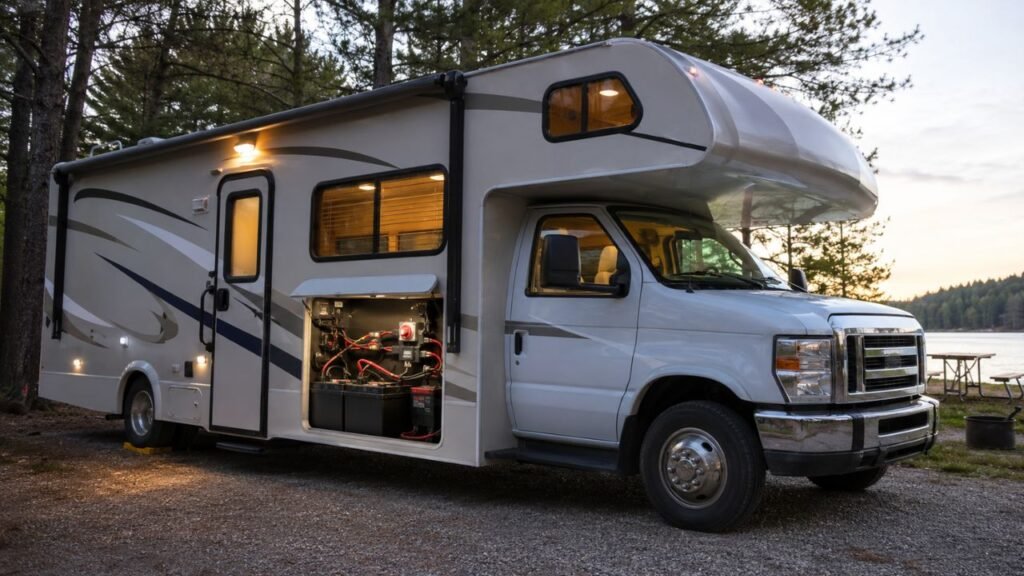
A manual rotary switch physically opens the main battery cable. You will usually find it near the battery compartment.
A remote disconnect switch controls a larger relay or solenoid. The small switch near the entrance sends a signal, while the relay handles the actual battery current.
In both designs, the result depends on where the switch sits within the wiring system. Any cable connected directly to the battery before the switch can remain powered.
Why Does Power Stay On After the Battery Disconnect Is Off?
Power can remain because another source is supplying the RV. It may also come through equipment connected directly to the battery.
Shore Power Is Still Connected
Shore power is the most common reason RV lights remain on after you use the battery disconnect.
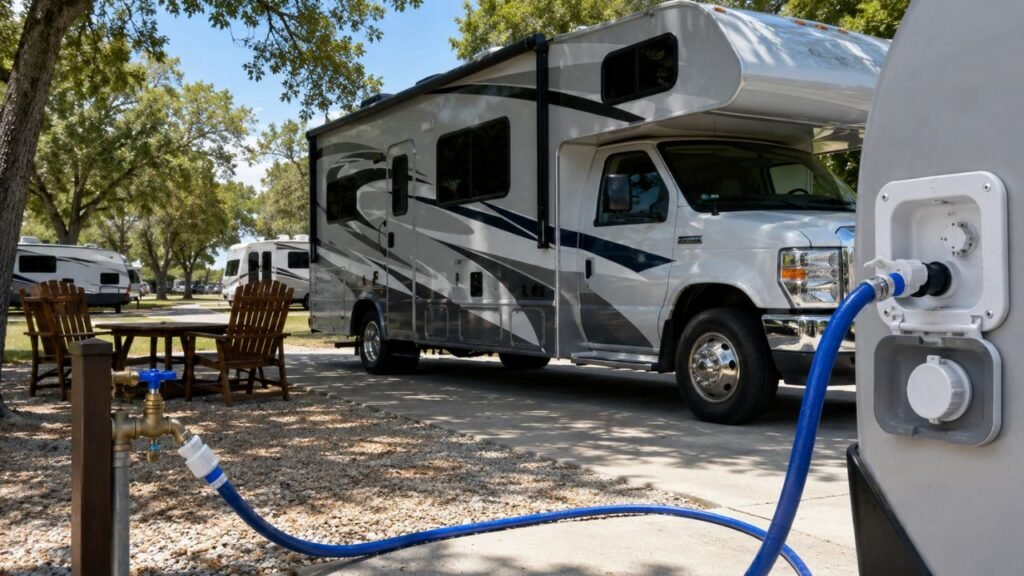
When your RV is plugged into a campground pedestal or household outlet, the converter changes 120-volt power into 12-volt DC power. That power can operate your ceiling lights, water pump, furnace controls, fans, and appliance control boards.
The battery may be completely disconnected while the converter continues powering those circuits.
Unplug the shore power cord before testing the switch. Otherwise, a working converter can make a good disconnect look defective.
The Generator Is Running
An onboard or portable generator can create the same situation.
The generator supplies 120-volt AC power to the RV. Your converter then changes some of that electricity into 12-volt power for the coach circuits.
Turning off the battery disconnect usually does not shut down the generator. Interior lights and outlets may therefore continue operating normally.
Turn off the generator and wait briefly before checking the disconnect again.
Solar Power Is Still Feeding the System
Many RV solar charge controllers connect directly to the battery bank. Their cables may bypass the factory disconnect completely.
This setup allows the solar system to continue charging the battery while the main coach loads are disconnected. In some installations, solar power can also keep selected 12-volt circuits active.
Look for smaller cables attached to the battery terminals. Solar wiring often includes an inline fuse or circuit breaker near the positive terminal.
Do not randomly remove solar cables while the panels are producing power. Solar components often require a specific shutdown sequence.
Follow the controller instructions or ask an RV technician to identify the wiring.
Safety Devices Bypass the Disconnect
Some circuits remain powered because turning them off would create a safety risk.
Common examples include:
- Propane detectors.
- Carbon monoxide detectors.
- Trailer brake breakaway switches.
- Security alarms.
- Battery monitoring equipment.
- Emergency lighting.
- Automatic safety control modules.
A trailer breakaway switch must remain available if the trailer separates from the tow vehicle. It uses battery power to activate the trailer brakes during an emergency.
Some propane and carbon monoxide detectors also receive direct battery power. However, the exact wiring varies between RV manufacturers.
Do not remove or relocate safety wiring simply to eliminate a small battery draw. First confirm what the circuit controls.
The Chassis Battery Is Still Connected
Motorhomes usually contain two separate electrical systems.
The house battery powers living-area equipment. The chassis battery starts the engine and supplies automotive systems.
Turning off the house battery disconnect may not affect:
- Dashboard equipment.
- Cab lighting.
- Ignition circuits.
- Electric entry steps.
- Radio memory.
- Power seats.
- Exterior automotive lights.
- Engine control modules.
Some motorhomes include separate switches for the house and chassis batteries. Others leave the chassis system permanently connected.
Your entry steps may also use the chassis battery so they continue operating when you enter or leave the RV.
The Inverter Connects Directly to the Battery
Large inverters draw substantial current. They usually connect directly to the battery using short, heavy cables.
The inverter may therefore remain powered after you turn off the factory disconnect. Its display, cooling fan, standby circuit, or connected outlets may continue working.
Many inverters have their own power button or remote control panel. However, turning off the display does not always remove all standby consumption.
A dedicated inverter disconnect provides more complete isolation. It must be correctly rated for the inverter’s current.
Slide-Outs, Jacks, or Steps Have Direct Power
High-current RV equipment often uses dedicated battery cables and large fuses. These circuits may bypass the standard coach disconnect.
Common examples include:
- Electric slide-outs.
- Hydraulic slide-out pumps.
- Leveling jacks.
- Stabilizer jacks.
- Electric tongue jacks.
- Landing gear.
- Power awnings.
- Entry steps.
Manufacturers may keep these systems available for setup or emergency operation. Their continued operation does not automatically mean the switch has failed.
However, you should still identify their wiring before long-term storage.
A Second Battery Bank Is Supplying Power
Your RV may contain another battery source that the factory switch does not control.
Possible sources include:
- A second house battery bank.
- An aftermarket lithium battery.
- A portable power system.
- A DC-to-DC charger.
- A battery combiner.
- A tow vehicle charging wire.
- An emergency start circuit.
- A separate inverter battery.
Disconnecting one battery does not isolate another connected bank. This becomes especially important after electrical upgrades.
Trace every large positive cable before assuming the factory switch controls the complete system.
Aftermarket Accessories Bypass the Switch
Previous owners and installers often connect accessories directly to the battery. This approach may be convenient, but it bypasses the disconnect.
Common direct-wired accessories include:
- USB charging ports.
- Stereos and amplifiers.
- Backup cameras.
- Cellular boosters.
- Internet routers.
- Diesel heaters.
- Additional lighting.
- Refrigerators.
- Security systems.
- Battery heaters.
Direct battery wiring is not always wrong. High-current or critical equipment may need a dedicated connection.
The problem appears when unnecessary accessories continue drawing power during storage.
The Disconnect Relay Has Failed
Remote battery disconnect switches normally operate a larger relay. The relay contains the contacts that carry the battery current.
You may hear a click when pressing the switch. That sound does not always mean the contacts opened.
The relay can fail because of:
- Burned contacts.
- Welded contacts.
- Internal mechanical damage.
- Corrosion.
- Loose control wiring.
- A poor ground connection.
- Low battery voltage.
- A blown control fuse.
- Excessive current.
A failed relay may leave the RV connected continuously. It may also work intermittently.
Manual rotary switches can fail as well. Loose terminals, internal wear, or overheating can prevent proper disconnection.
What Can Stay Powered With the Disconnect Off?
The equipment that remains active can help you identify the power source. Use the table below as a troubleshooting guide.
| Powered Component | Likely Power Source | Can This Be Normal? | First Thing to Check |
| Ceiling lights | Converter, solar, or bypass wiring | Sometimes | Unplug shore power |
| Household outlets | Shore power, generator, or inverter | Yes | Turn off all AC sources |
| Propane detector | Direct battery wiring | Often | Check the detector circuit |
| Breakaway switch | Direct battery wiring | Yes | Do not disable it |
| Electric steps | Chassis battery or direct feed | Often | Check the chassis system |
| Radio memory | House or chassis battery | Often | Identify the radio feed |
| Inverter display | Direct battery connection | Yes | Turn off the inverter |
| Water pump | Converter or failed disconnect | Sometimes | Remove shore power |
| Slide-outs | Dedicated battery cable | Often | Inspect the slide fuse |
| Battery monitor | Direct battery connection | Yes | Check monitor wiring |
| Most coach lights | Failed relay or major bypass | Usually not | Test relay output |
| Refrigerator controls | Converter or direct DC feed | Sometimes | Remove outside power |
One small monitor remaining on may be normal. Most 12-volt equipment staying active usually deserves further testing.
Is the Remaining Power 12-Volt or 120-Volt?
Before replacing anything, determine which electrical system still works. A battery disconnect mainly controls battery-supplied 12-volt DC power.
- Ceiling lights normally use 12-volt DC power.
- Water pumps normally use 12-volt DC power.
- Furnace controls normally use 12-volt DC power.
- Tank monitors normally use 12-volt DC power.
- Household outlets normally supply 120-volt AC power.
- Microwaves normally require 120-volt AC power.
- Air conditioners normally require 120-volt AC power.
- Converters create 12-volt power from 120-volt electricity.
- Inverters create 120-volt power from battery electricity.
Suppose the outlets still work after using the disconnect. Shore power, generator power, or an inverter is probably supplying them.
Suppose the ceiling lights work only while the RV is plugged in. The converter is probably supplying the 12-volt system.
This distinction prevents you from replacing a switch that is functioning correctly.
How to Test an RV Battery Disconnect That Leaves Power On
Testing becomes much easier after you remove every alternative power source. Otherwise, another source can feed the coach and hide the real result.
Remove watches, rings, necklaces, and other metal items before working near batteries. Never place tools across exposed terminals.
Remove Every Alternative Power Source
Follow these steps in order:
- Unplug the RV from shore power.
- Shut down the generator.
- Turn off the inverter.
- Turn off the motorhome engine.
- Disconnect the tow vehicle.
- Isolate auxiliary battery systems.
- Shut down solar using the approved procedure.
- Wait briefly for stored power to dissipate.
- Turn the battery disconnect off.
- Test the remaining circuits again.
Do not disconnect solar wiring in a random order. Some controllers can be damaged when panel and battery connections are removed incorrectly.
Identify Exactly What Still Works
Do not simply note that the RV still has power. Record each component that remains active.
Check the following equipment:
- Interior lights.
- Water pump.
- Vent fans.
- Refrigerator display.
- Furnace controls.
- Tank monitor.
- USB ports.
- Household outlets.
- Inverter display.
- Slide-outs.
- Entry steps.
- Leveling jacks.
- Safety detectors.
- Stereo memory.
If only a safety detector remains on, the bypass may be intentional. If every ceiling light works, the main coach circuit may still be connected.
Listen for the Relay
Press the disconnect switch while standing near the battery compartment. A working relay often creates a noticeable clicking sound.
No click may indicate:
- A blown control fuse.
- A failed wall switch.
- Loose control wiring.
- Low battery voltage.
- A damaged relay coil.
- A poor ground connection.
A click only confirms that the relay mechanism received a signal. The main contacts may still remain closed.
Check the Indicator Light
Some RVs use a light showing “USE,” “STORE,” or “CONNECTED.” This light can be helpful, but it does not always confirm actual disconnection.
The indicator may show the command sent from the wall switch. It may not verify the physical position of the relay contacts.
Test actual circuits rather than relying only on the indicator.
Measure Voltage Across the Disconnect
A multimeter can confirm whether the relay or manual switch opens. However, large battery cables can carry dangerous current.
If you are comfortable testing DC systems, identify the battery side and coach side of the disconnect.
With the switch on, both sides should show battery voltage.
With the switch off, the battery side should remain energized. The coach side should lose its battery feed.
Voltage on both sides may indicate:
- Welded relay contacts.
- Incorrect wiring.
- A bypass cable.
- Solar backfeeding.
- Converter power.
- A second battery connection.
Another power source can feed the coach side backward. Remove every external source before drawing a conclusion.
Ask an RV electrician to perform the test when the terminals are difficult to access.
Inspect the Battery Terminals
Look closely at every cable connected to the battery. Small wires can hide behind the larger main cables.
Check for:
- Multiple positive cables.
- Inline fuse holders.
- Solar controller wiring.
- Inverter cables.
- Battery monitor wires.
- Battery heater wires.
- Chassis charging cables.
- Unlabeled accessory wires.
- Loose terminals.
- Corroded connectors.
A cable connected before the disconnect will remain energized. That connection may explain why one accessory keeps working.
Every positive accessory wire should have proper fuse protection near the battery.
Check the Control Fuse and Wiring
Remote disconnect relays usually have smaller control wires. These wires may use a separate fuse from the main battery circuit.
Inspect for:
- Blown fuses.
- Loose spade connectors.
- Broken crimp terminals.
- Corrosion.
- Damaged insulation.
- Water intrusion.
- Rodent damage.
- Weak ground connections.
- Poor previous repairs.
An intermittent connection can make the switch work one day and fail the next.
Is the Remaining Power Normal or a Problem?
Some circuits are designed to remain active. Other symptoms suggest a failed relay, unsafe modification, or wiring mistake.
Power That Can Be Normal
The following equipment may remain powered without indicating a fault:
- Trailer breakaway brakes.
- Selected propane detectors.
- Carbon monoxide detectors.
- Battery monitors.
- Solar charge controllers.
- Direct-connected inverter displays.
- Chassis-powered motorhome equipment.
- Electric entry steps.
- Selected slide-out systems.
- Generator-powered equipment.
- Shore-powered 12-volt equipment.
Even normal bypass circuits can slowly drain a battery. You still need to account for them during storage.
Power That May Indicate a Problem
Investigate further when you notice:
- Most interior lights remain active.
- The water pump works without outside power.
- The disconnect relay does not click.
- The relay clicks, but nothing turns off.
- The switch works only occasionally.
- The battery drains quickly in storage.
- The relay becomes unusually warm.
- Battery terminals show heat damage.
- Wiring lacks proper fuses.
- Several unknown wires bypass the switch.
- The disconnect indicator behaves unpredictably.
- Cables smell burned or appear melted.
Heat, smoke, or melting requires immediate attention. Stop using the electrical system until it is inspected.
How to Fix an RV Battery Disconnect That Does Not Work
The correct repair depends on the actual cause. Begin with power-source checks before replacing the switch or relay.
Reset or Replace the Relay
Cycling the disconnect several times may free a relay that stopped between positions. However, this is not a dependable long-term repair.
A relay with burned or welded contacts usually requires replacement.
The replacement must match:
- System voltage.
- Continuous current rating.
- Surge current rating.
- Terminal size.
- Control type.
- Mounting style.
- Latching design.
Do not replace a battery relay with a small automotive relay. An undersized component can overheat and fail.
Repair the Wall Switch or Control Circuit
The wall switch carries a small control current. Failed contacts can prevent the main relay from changing positions.
A technician may test:
- Switch continuity.
- Control voltage.
- Relay trigger wiring.
- Ground connections.
- Fuse condition.
- Connector resistance.
- Voltage drop.
- Latching operation.
Replacing the wall switch will not solve welded relay contacts. Both components must be tested separately.
Move Nonessential Accessories to the Switched Side
Nonessential accessories connected directly to the battery can often move to a fused switched distribution point.
This change allows the factory disconnect to control those loads. It can also reduce battery drain during storage.
Do not relocate trailer breakaway wiring or required safety circuits. Those systems may need uninterrupted battery power.
Large inverters also require dedicated wiring. Never move them onto an underrated coach circuit.
Add a Master Battery Disconnect
A properly installed master switch can provide more complete battery isolation. It is normally mounted close to the battery bank.
The switch must handle the highest expected current. This includes inverter surges, hydraulic pumps, and motor starting loads.
Consider the following before installation:
- Battery voltage.
- Continuous current.
- Surge current.
- Cable size.
- Cable length.
- Terminal protection.
- Weather exposure.
- Mounting access.
- Required bypass wiring.
- Emergency equipment.
- Proper fuse placement.
A weak disconnect can become a high-resistance connection. That can cause voltage loss, heat, and fire risk.
Professional installation is recommended for large lithium banks and high-power inverters.
Add Separate Disconnects for Direct Loads
Some equipment works better with dedicated disconnect switches. This allows you to isolate individual systems without disabling safety equipment.
Possible dedicated disconnects include:
- Inverter disconnect.
- Solar-panel disconnect.
- Solar-controller disconnect.
- Chassis battery disconnect.
- Auxiliary battery disconnect.
- Battery heater disconnect.
- Stereo amplifier disconnect.
- Accessory fuse-panel switch.
Each switch must match the current carried by that circuit.
Correct Unsafe Wiring
An RV with several undocumented modifications may require complete wire tracing.
Look for unsafe conditions such as:
- Missing fuses.
- Undersized cables.
- Melted insulation.
- Exposed copper.
- Loose battery terminals.
- Corroded connectors.
- Unsupported wiring.
- Household wire nuts.
- Unlabeled direct connections.
- Multiple accessories sharing one small wire.
Label every cable after confirming its destination. Clear labels will make future repairs much easier.
Should an RV Battery Disconnect Shut Off Everything?
A factory battery disconnect should normally turn off the main battery-fed coach circuits. It does not necessarily make the entire RV electrically dead.
Shore power and generator power can still run the converter. An inverter can continue energizing selected outlets.
A motorhome’s chassis battery may keep cab equipment and entry steps working. Solar systems and emergency circuits may also remain connected.
For storage, the switch mainly reduces house-battery loads. For electrical repairs, never assume every wire is safe because the switch is off.
Use a meter to confirm the circuit is de-energized. Physically disconnecting the battery may also be necessary.
Why Does the Battery Still Drain With the Disconnect Off?
A working disconnect does not stop every possible drain. Direct-connected equipment and natural self-discharge can still reduce battery charge.
Common causes include:
- Propane detectors.
- Carbon monoxide detectors.
- Trailer breakaway equipment.
- Inverter standby draw.
- Battery monitor draw.
- Solar controller consumption.
- Cellular or security equipment.
- Battery heaters.
- Aftermarket accessories.
- A stuck relay.
- A second connected battery bank.
- Battery self-discharge.
- Internal battery damage.
- Corroded or wet electrical connections.
Battery chemistry also affects storage performance. Lead-acid and lithium batteries do not have identical maintenance requirements.
A damaged battery can lose voltage even after complete isolation. In that case, replacing the disconnect will not solve the problem.
A clamp meter or current test can reveal whether power is still leaving the battery.
How to Prevent Battery Drain During Storage
Good storage preparation protects your battery and reduces unpleasant surprises. Use a routine that matches your battery chemistry and charging system.
- Fully charge the battery before storage.
- Confirm that the disconnect actually operates.
- Turn off the inverter separately.
- Identify every direct battery connection.
- Remove unnecessary plug-in accessories.
- Check solar charging settings.
- Inspect terminals for looseness or corrosion.
- Measure battery voltage periodically.
- Maintain flooded battery water levels.
- Follow lithium storage recommendations.
- Respect lithium charging temperature limits.
- Correct known parasitic loads.
- Inspect the relay for unusual warmth.
- Physically isolate the battery when required.
Do not leave a lead-acid battery deeply discharged. Long-term low charge can cause permanent sulfation.
Follow the battery manufacturer’s storage instructions instead of using one routine for every battery type.
When Should You Call an RV Technician?
Basic source checks are manageable for many RV owners. High-current battery work requires additional training and caution.
Contact a qualified technician when:
- Battery cables become hot.
- You smell burned wiring.
- The disconnect produces sparks.
- The relay repeatedly fails.
- Most circuits remain active after complete isolation.
- Battery wiring lacks proper fuses.
- Previous modifications are undocumented.
- The RV has a large inverter.
- The system uses a large lithium bank.
- Solar wiring cannot be identified.
- Voltage appears on unexpected circuits.
- You cannot identify AC and DC wiring.
- The battery still drains after isolation.
- Terminals show melting or discoloration.
Stop testing immediately if you notice smoke, heat, or melted insulation.
Final Answer
Your RV battery disconnect may be working correctly even when some equipment stays on. Shore power, solar input, chassis batteries, inverters, safety equipment, and direct wiring can all bypass the switch.
Remove every alternative power source before testing it. If most coach circuits still work, inspect the relay and battery wiring. Seek professional help when cables become hot, damaged, or difficult to identify.
Related FAQs
Why Do My RV Lights Stay On With the Battery Disconnect Off?
Your RV lights may receive 12-volt power from the converter while connected to shore power. Solar power, bypass wiring, or a failed disconnect relay can also keep them operating.
Why Do My RV Outlets Work With the Battery Disconnected?
Household-style outlets use 120-volt power. Shore power, a generator, or an inverter can keep those outlets active even when the house battery is disconnected.
Should the RV Battery Disconnect Be On While Plugged Into Shore Power?
Many RVs need the disconnect on so the converter can charge the battery properly. However, the correct position depends on your charging system and manufacturer instructions.
Does the RV Battery Disconnect Stop Solar Charging?
It depends on how the solar controller is wired. A controller connected directly to the battery can continue charging after the factory disconnect is turned off.
Why Does My Propane Detector Stay On?
Some propane detectors receive direct battery power because they perform an important safety function. Check the wiring before assuming the disconnect switch has failed.
Does the Battery Disconnect Turn Off the Inverter?
Most large inverters connect directly to the battery. You normally need to turn off the inverter separately or use a dedicated high-current disconnect.
Can a Bad Disconnect Switch Drain the Battery?
Yes, a stuck relay or damaged switch can leave loads connected during storage. Corrosion and loose control wiring can also cause intermittent disconnection.
Why Does the Disconnect Click but Leave Power On?
The relay mechanism may move while its main contacts remain welded closed. Another power source may also be feeding the coach side of the system.
Does the House Disconnect Turn Off the Chassis Battery?
Usually not. Motorhomes often have separate house and chassis battery systems, and each system may require its own disconnect switch.
Can I Remove a Battery Cable Instead of Using the Switch?
Removing a battery cable provides greater isolation, but solar, chassis, or auxiliary batteries may still energize certain circuits. Always confirm the system is safe before working.
Which Battery Terminal Should I Disconnect First?
The negative terminal is generally removed first and reconnected last. This reduces the chance of accidentally shorting a tool against the RV frame.
Why Does My Disconnect Work Only Sometimes?
Intermittent operation may come from loose wiring, corrosion, weak battery voltage, a failed wall switch, or worn relay contacts.
Does a Battery Disconnect Stop Every Parasitic Load?
No. Direct-wired detectors, inverters, battery monitors, solar controllers, and emergency circuits may continue drawing small amounts of current.
Should I Turn the Disconnect Off Every Night?
You normally do not need to turn it off every night while camping. Doing so may interrupt charging or disable equipment that needs continuous 12-volt power.
Why Does My Water Pump Work With the Disconnect Off?
The converter may be powering the water pump while the RV is plugged in. A failed relay or bypassed pump circuit could also keep it active.

David Marshall shares travel route insights, mileage planning tips, and road-tested advice. His writing helps travelers understand distance, timing, and equipment choices. Every article is built around clarity and real-world usefulness.