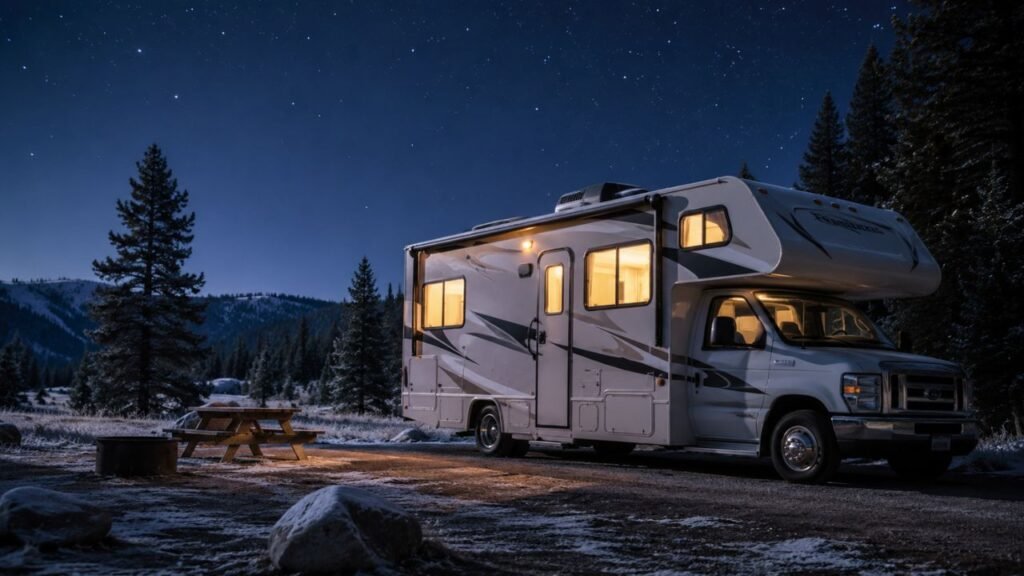
Yes, an RV furnace can drain the battery overnight. Propane creates the heat, but the blower motor, thermostat, ignition system, gas valve, and control board all rely on 12-volt battery power.
In this guide, I’ll help you estimate furnace consumption, identify excessive battery drain, test your system, and keep the heat running through cold nights.
Key Takeaways
- Most RV furnaces draw around 3 to 10 amps while operating.
- The blower motor usually consumes most of the battery power.
- Furnace cycling time determines total overnight battery consumption.
- A 100Ah lead-acid battery may provide only about 50Ah safely.
- Cold weather increases furnace runtime and reduces battery performance.
- Other 12-volt devices also contribute to overnight battery drain.
- A battery monitor provides better information than a basic control panel.
- Improving insulation can reduce furnace use without adding batteries.
Why Does a Propane RV Furnace Use Battery Power?
Your RV furnace burns propane, but propane only provides the heat. The furnace still needs electricity to start, control, and distribute that heat throughout your RV.
When the thermostat calls for heat, the 12-volt blower starts first. It clears the combustion chamber and begins moving air through the ducts. Once the blower reaches the proper speed, a safety switch allows the gas valve and ignition system to operate.
The battery also powers the thermostat, circuit board, electronic igniter, and safety controls. After the burner shuts down, the blower usually keeps running briefly to cool the furnace.
That means your furnace continues using battery power before, during, and after each heating cycle.
A weak battery may run the blower without producing heat. The motor may not spin fast enough to activate the furnace’s sail switch. When that happens, the safety system prevents propane ignition.
How Much Battery Power Does an RV Furnace Use?
The exact electrical draw depends on the furnace size, blower motor, duct resistance, and condition. However, the amount printed on the furnace label tells only part of the story.
Typical RV Furnace Amp Draw
Most RV furnaces draw around 3 to 10 amps while the blower operates. Smaller furnaces in compact trailers may remain near the lower end. Larger furnaces can draw 8 amps or more.
The most accurate rating is normally printed on the furnace data label. You may find that label behind the exterior access panel or inside the owner’s manual.
Remember that the rated draw shows power consumption while operating. It does not automatically mean the furnace uses that amount every hour.
Furnace Duty Cycle
The duty cycle is the percentage of each hour that the furnace runs. This number has a major effect on overnight battery use.
Suppose your furnace draws 7 amps:
- Running 15 minutes per hour uses about 1.75Ah hourly.
- Running 30 minutes per hour uses about 3.5Ah hourly.
- Running 45 minutes per hour uses about 5.25Ah hourly.
- Running continuously uses about 7Ah every hour.
A furnace that cycles briefly during mild weather may use little power. The same furnace can consume several times more during freezing conditions.
Startup and Shutdown Power Use
Your furnace does not begin producing heat immediately after the thermostat activates. The blower starts first and runs through a short safety sequence.
The fan also continues operating after the burner shuts off. This cool-down period removes remaining heat from the furnace chamber.
These extra minutes count toward your total electrical consumption. Frequent short cycles can therefore use more battery power than expected.
Estimated RV Furnace Battery Use Overnight
The following estimates can help you plan for an eight-hour night. Your actual consumption may differ because of temperature, insulation, thermostat settings, wind, and furnace condition.
| Furnace Draw | Average Runtime Each Hour | Eight-Hour Furnace Use | Likely Conditions |
| 4 amps | 15 minutes | 8Ah | Mild night with good insulation |
| 6 amps | 20 minutes | 16Ah | Cool weather with moderate cycling |
| 7 amps | 30 minutes | 28Ah | Cold night with frequent cycling |
| 8 amps | 45 minutes | 48Ah | Freezing weather or poor insulation |
| 10 amps | 60 minutes | 80Ah | Continuous operation or severe heat loss |
These numbers cover only the furnace. Your battery also powers safety detectors, lights, refrigerator controls, water pumps, USB outlets, fans, and other equipment.
An inverter can add a surprisingly large drain. Some inverters consume power even when no appliance is actively using an outlet.
Your true overnight consumption may therefore be 5 to 20Ah higher than the furnace estimate.
How Long Will an RV Battery Run the Furnace?
Battery runtime depends on usable capacity, not only the amp-hour number printed on the case. Battery chemistry, age, temperature, and condition all affect the power available.
One 100Ah Lead-Acid Battery
A healthy 100Ah flooded, AGM, or gel battery is commonly treated as providing about 50Ah of conservatively usable capacity.
You can discharge it further, but repeated deep discharges may reduce its lifespan. A furnace using 28Ah overnight could consume more than half your practical reserve.
Add lights, detectors, refrigerator controls, and a water pump, and the battery may approach its recommended discharge limit before morning.
During very cold weather, a furnace using 40 to 50Ah could nearly exhaust the usable capacity by itself.
One 100Ah Lithium Battery
A 100Ah lithium battery generally provides considerably more usable capacity. Depending on the battery and its protection system, you may have access to around 80 to nearly 100Ah.
Lithium batteries also maintain steadier voltage while discharging. That stable voltage can help the furnace blower maintain the speed required for reliable ignition.
However, lithium does not create unlimited energy. The furnace can still drain the battery if it runs continuously or shares power with several other loads.
Lithium charging may also stop at low temperatures unless the battery includes heating or cold-charge protection.
Two-Battery Banks
Two matched batteries can approximately double your available amp-hour capacity when wired correctly.
Two 100Ah lead-acid batteries may provide around 100Ah of conservatively usable power. Two 100Ah lithium batteries may offer considerably more.
Use batteries with the same chemistry, capacity, age, and condition whenever possible. Mixing an old battery with a new one can reduce performance and create uneven charging.
Proper cable sizing and balanced wiring are also important. Poor connections can prevent both batteries from sharing loads correctly.
Battery Age and Condition
A battery labeled 100Ah may no longer deliver 100Ah after years of use.
Lead-acid batteries can lose capacity from sulfation, low electrolyte, repeated deep discharge, incomplete charging, or long-term storage while partially discharged.
A battery may show acceptable voltage without holding much energy. Once the furnace blower starts, the voltage can collapse quickly.
A proper load or capacity test provides a clearer picture than resting voltage alone.
How to Calculate Whether Your Furnace Will Last Overnight
You do not need complicated electrical knowledge to estimate furnace runtime. A few basic numbers will give you a useful planning figure.
- Find the furnace’s running amp draw.
- Estimate its average runtime each hour.
- Divide the runtime minutes by 60.
- Multiply that result by the furnace amp draw.
- Multiply hourly consumption by your sleeping hours.
- Add other expected overnight electrical loads.
- Compare the total with usable battery capacity.
- Leave a reserve for morning use and unexpected cycling.
Use this simple formula:
Furnace amp draw × duty cycle × hours = estimated amp-hours used
Suppose your furnace draws 7 amps and runs half the time. Over eight hours, the calculation looks like this:
7 amps × 0.50 × 8 hours = 28Ah
Now add your other overnight loads. Detectors, refrigerator electronics, lights, water pump use, and chargers might add another 5 to 15Ah.
Your total estimated consumption could therefore reach 33 to 43Ah.
That amount may be manageable for a healthy lithium battery. It could leave a single lead-acid battery near its recommended discharge limit.
Why Does the Furnace Drain My Battery So Quickly?
Sometimes the furnace is simply working hard. In other cases, it exposes an existing problem involving battery health, wiring, charging, or heat loss.
The Furnace Runs Too Frequently
Frequent cycling is one of the most common reasons for rapid battery drain.
Your furnace may run longer because of:
- Freezing outdoor temperatures
- Strong winds around the RV
- A high thermostat setting
- Poor wall or floor insulation
- Drafts around windows and doors
- Worn slide-out seals
- Open or poorly sealed roof vents
- Uncovered single-pane windows
- Frequent entry-door use
- Blocked or damaged furnace ducts
Listen to how long each heating cycle lasts. A furnace running nearly continuously will use far more power than one cycling every hour.
You may also have a furnace that is too small for the RV. It can struggle to reach the thermostat setting during severe weather.
The Battery Was Not Fully Charged
A battery may appear full immediately after charging because of surface voltage. That reading does not always mean the battery has completed a full charging cycle.
Lead-acid batteries require enough time to move through bulk, absorption, and float charging stages. A short generator session may replace some power without reaching a complete charge.
You might begin the night believing you have 100Ah available when the battery is only partly charged.
A shunt-based battery monitor offers a more useful estimate than a basic four-light display.
The Battery Is Old or Damaged
Aging batteries often work normally with small loads but fail when the furnace starts.
Common battery problems include:
- Sulfated lead-acid plates
- Low electrolyte in serviceable batteries
- An internally damaged cell
- Repeated deep discharge
- Long periods without full charging
- Corroded terminals
- Loose battery cables
- Reduced capacity from age
If the lights dim sharply when the furnace starts, the battery may have excessive internal resistance.
Cold Weather Reduces Available Capacity
Cold weather creates two problems at the same time.
First, your furnace operates longer because the RV loses heat more quickly. Second, some batteries deliver less usable energy when they become cold.
Lead-acid batteries are particularly affected by low temperatures. A battery that performs adequately in mild weather may struggle during freezing conditions.
Lithium batteries usually discharge well in the cold, but many cannot accept a charge below freezing without protection.
Keep battery temperature in mind when estimating your overnight reserve.
Other Loads Are Running Overnight
Your furnace may receive the blame even when several devices are using the battery.
Common overnight loads include:
- Inverter standby consumption
- Refrigerator control electronics
- Propane and carbon monoxide detectors
- Interior and exterior lights
- USB outlets and phone chargers
- Water pump operation
- Tank heating pads
- Television and audio equipment
- Internet routers
- Satellite internet equipment
- Ventilation fans
- Heated blankets or mattress pads
- Stereo memory circuits
- Electric steps and control modules
Turn off optional equipment before sleeping. However, never disconnect essential safety detectors to save power.
Loose or Corroded Electrical Connections
The furnace may stop even when the battery still contains usable energy.
Loose terminals, undersized wiring, damaged grounds, and corroded connections create resistance. That resistance causes voltage to drop while the blower runs.
The battery might measure 12 volts at its terminals, while the furnace receives much less.
Inspect battery posts, frame grounds, fuse connections, and visible furnace wiring. Any overheated, melted, or discolored connection needs professional attention.
Signs the Furnace Is Pulling the Battery Too Low
A low battery does not always cause an immediate shutdown. The furnace may show several warning signs first.
- The blower sounds slower than normal.
- Interior lights dim when the furnace starts.
- The burner ignites and shuts down quickly.
- The blower runs without producing heat.
- The furnace repeatedly attempts to ignite.
- The thermostat resets or loses its display.
- A battery monitor shows a sharp voltage drop.
- Other 12-volt devices stop working overnight.
- The furnace works normally after connecting shore power.
- The furnace fuse remains intact despite repeated shutdowns.
These symptoms do not always confirm a battery problem. A dirty sail switch, blocked airflow, faulty control board, poor ground, or damaged blower can produce similar behavior.
Testing battery voltage under load helps separate power problems from furnace component failures.
How to Test Furnace Battery Drain
A careful test can reveal whether the furnace is consuming normal power or whether another problem is present.
- Fully charge the battery using the correct charger setting.
- Turn off shore power and allow the battery to rest.
- Record the starting state of charge or resting voltage.
- Turn off unnecessary lights and electrical equipment.
- Switch off the inverter unless it is needed.
- Run the furnace and measure its current draw.
- Record how long each heating cycle lasts.
- Check the battery reading before sleeping.
- Check the battery again immediately after waking.
- Compare the measured loss with your estimated consumption.
- Test the battery if voltage falls faster than expected.
- Inspect wiring if voltage differs between the battery and furnace.
A shunt-based battery monitor is particularly helpful. It measures current entering and leaving the battery bank.
You can also use a DC clamp meter when it supports low-current measurements. Always follow the meter manufacturer’s instructions.
Avoid disconnecting live wires unless you understand the circuit. Improper testing can damage electronics or create a short circuit.
How to Stop an RV Furnace From Draining the Battery Overnight
You can often improve overnight runtime without immediately purchasing a larger battery bank. Start by reducing heat loss, unnecessary electrical use, and incomplete charging.
Start the Night With a Full Battery
Fully charge the battery before temperatures fall.
When using a generator, allow enough charging time for your battery type. A brief run may replace the initial bulk charge without completely finishing the cycle.
Check that your converter or charger uses the correct voltage profile. An older converter may charge slowly or never bring the battery to full capacity.
Solar panels can help during daylight, but check actual production. Shade, clouds, short winter days, and low sun angles can significantly reduce output.
Lower the Thermostat Setting
Every degree you lower the thermostat can reduce how frequently the furnace cycles.
Choose a safe sleeping temperature and use suitable bedding for the conditions. Warm socks, layered clothing, and insulated blankets can reduce your dependence on the furnace.
Do not turn the heat so low that plumbing, tanks, or water lines become vulnerable to freezing.
Also avoid using unvented combustion heaters unless they are specifically approved and operated according to their safety instructions.
Reduce Heat Loss
Your furnace consumes less power when heated air remains inside longer.
Try these practical improvements:
- Cover windows with insulated shades.
- Seal noticeable drafts around doors.
- Check slide-out seals for gaps.
- Close roof vents when ventilation is unnecessary.
- Place rugs over cold flooring.
- Use approved vent cushions.
- Close curtains around the sleeping area.
- Repair damaged furnace ducts.
- Keep exterior storage doors properly latched.
- Avoid opening the entry door repeatedly.
Do not block required furnace return-air openings. Restricted airflow can cause overheating and furnace shutdown.
Turn Off Unnecessary Electrical Loads
Switch off the inverter when you do not need 120-volt appliances. Even an unloaded inverter may draw noticeable standby current.
Disconnect optional chargers, televisions, routers, and entertainment equipment. Turn off lights in unused areas.
Use direct 12-volt charging for phones when practical. Converting battery power from 12 volts to 120 volts and back again wastes energy.
Keep smoke, propane, and carbon monoxide detectors operating. These devices provide essential protection.
Service the Furnace
A poorly maintained furnace may run longer while delivering less heat.
Check that return-air openings remain clear. Make sure bedding, bags, furniture, or storage items are not blocking floor registers.
Inspect accessible ducts for separation or crushing. A loose duct can send heated air into a cabinet or underbelly instead of the living space.
A technician can inspect the burner, blower wheel, gas pressure, sail switch, control board, and combustion chamber.
Never attempt propane repairs without the proper training and testing equipment.
Improve the Battery Bank
Adding capacity makes sense when the existing battery is healthy but too small for your actual needs.
You might add a second matched battery or upgrade to a larger bank. Lithium can offer more usable energy with less weight.
Before changing battery chemistry, confirm compatibility with:
- The converter or charger
- Solar charge controller
- Alternator charging system
- Battery monitor
- Cable size
- Fuses and breakers
- Battery compartment
- Temperature protection
- Inverter settings
A battery upgrade cannot fix poor insulation, damaged wiring, or an inefficient furnace. Measure your usage before spending money.
Add Reliable Recharging
Your overnight energy must be replaced during the following day.
Possible charging sources include:
- Shore power
- Solar panels
- A portable generator
- An onboard generator
- Tow-vehicle alternator charging
- A DC-to-DC charger
Solar works best when sized around daily amp-hour replacement. Panel wattage alone does not guarantee enough winter charging.
Generators can provide dependable charging, but follow campground rules and carbon monoxide safety requirements. Never operate a generator inside an RV, garage, or enclosed area.
Will Solar Panels Keep the Furnace Running Overnight?
Solar panels do not directly power your furnace after sunset. The furnace draws energy from the battery bank throughout the night.
During daylight, solar panels can replace the energy used by the furnace. Whether they replace enough depends on available sunlight, panel size, charging efficiency, and your other loads.
Winter conditions make this more difficult. The days are shorter, the sun remains lower, and clouds may reduce output. Snow or shade can reduce production further.
At the same time, your furnace usually consumes more power during winter.
Calculate solar needs based on daily energy replacement. For example, if your furnace and other loads consume 50Ah overnight, your solar system should regularly replace at least that amount plus charging losses.
A battery monitor and solar controller display can show whether your system actually recovers before the next night.
Should You Upgrade to Lithium for Furnace Use?
Lithium batteries can make overnight furnace use easier, but they are not always the first repair. Check battery health, charging performance, and heat loss before replacing a working system.
| Feature | Lead-Acid Battery | Lithium Battery |
| Typical usable capacity | About half the rated capacity | Most of the rated capacity |
| Voltage under furnace load | Drops more noticeably | Usually remains steadier |
| Weight | Heavier | Lighter |
| Charging speed | Generally slower | Usually faster |
| Cold-weather charging | Slower but often possible | May stop without protection |
| Initial cost | Lower | Higher |
| Maintenance | Depends on battery type | Usually minimal |
| Cycle life | Generally shorter | Generally longer |
| Charger compatibility | Often already compatible | Must be confirmed |
Lithium is especially helpful when weight and usable capacity matter. One 100Ah lithium battery may provide nearly twice the practical energy of one 100Ah lead-acid battery.
However, the charging system must support the correct voltage profile. Some installations also require a DC-to-DC charger for alternator protection.
A heated lithium battery may be useful for winter camping. Otherwise, the battery management system may block charging below its safe temperature.
Can Low Battery Voltage Stop the Furnace From Working?
Yes, low voltage can stop an RV furnace before the battery appears completely dead.
The furnace blower must spin fast enough to move the sail switch. That switch confirms safe airflow before allowing ignition.
When battery voltage falls, the blower may slow down. The sail switch may remain open, preventing the gas valve and igniter from operating.
You may hear the blower running without heat. The furnace might also make several ignition attempts before shutting down.
Voltage loss can occur inside the wiring as well. Long cable runs, corroded grounds, loose terminals, and small wires can reduce the voltage reaching the furnace.
Measure voltage at the battery and furnace while the blower operates. A meaningful difference between those readings points toward wiring resistance.
When Should You Call an RV Technician?
Some furnace and battery problems require professional testing. Stop troubleshooting when you encounter a propane hazard, damaged wiring, or unfamiliar electrical work.
Call a qualified RV technician when:
- You smell propane inside or around the RV.
- The propane detector activates.
- Battery cables become hot.
- Wiring appears melted or discolored.
- The furnace fuse repeatedly blows.
- The burner repeatedly fails to ignite.
- The furnace produces soot.
- Exhaust appears unusual.
- The blower makes grinding noises.
- Voltage drops despite a tested healthy battery.
- A circuit board shows burn damage.
- You are uncomfortable testing propane equipment.
When you suspect a propane leak, shut down the furnace if safe. Turn off the propane supply, leave the RV, and avoid creating sparks.
Do not resume furnace use until the system has been inspected.
Practical Overnight Furnace Power Plan
A simple routine can prevent most unexpected morning shutdowns.
- Fully charge your battery before sunset.
- Confirm available capacity with a battery monitor.
- Check expected overnight temperatures.
- Turn off the inverter when unnecessary.
- Disconnect optional electrical loads.
- Set a moderate thermostat temperature.
- Cover windows and reduce drafts.
- Keep furnace vents and returns clear.
- Check propane supply before sleeping.
- Leave a reasonable battery reserve.
- Review battery capacity in the morning.
- Fully replace the energy used overnight.
Record your results for several nights. You will quickly learn how temperature and thermostat settings affect your specific RV.
That information is much more useful than relying only on general battery estimates.
Final Thoughts
An RV furnace can absolutely drain the battery overnight. The risk is highest during freezing weather, frequent cycling, or operation from one small lead-acid battery.
Start by measuring the furnace draw, duty cycle, battery capacity, and other overnight loads. Those numbers will show whether you need better charging, less heat loss, a healthier battery, or more capacity.
In many cases, small changes make a noticeable difference. A full charge, lower thermostat setting, insulated windows, and reduced inverter use may keep the furnace running until morning.
Related FAQs
How Many Amps Does an RV Furnace Use?
Most RV furnaces draw around 3 to 10 amps while operating, although the exact amount depends on furnace size, blower design, airflow resistance, and condition.
How Long Will a 100Ah Battery Run an RV Furnace?
A 100Ah battery may run an RV furnace for one or more nights, but runtime depends on battery chemistry, usable capacity, furnace cycling, temperature, and other electrical loads.
Can a Furnace Completely Kill an RV Battery?
Yes, a furnace can deeply discharge a small, old, partially charged, or undersized battery during a cold night, particularly when the blower runs frequently.
Why Does My Furnace Stop Working During the Night?
Your furnace may stop because of low battery voltage, weak wiring connections, blocked airflow, a dirty sail switch, ignition trouble, or an exhausted propane supply.
Does an RV Furnace Use More Battery in Cold Weather?
Yes, the furnace normally cycles more often in cold weather, while low temperatures may also reduce the usable performance of certain battery types.
Will Two RV Batteries Run the Furnace All Night?
Two healthy, matched batteries provide more capacity and may easily support overnight furnace use, but total runtime still depends on cycling frequency and other electrical loads.
Should I Leave My RV Inverter On Overnight?
Leave the inverter on only when you need 120-volt equipment. Its standby consumption can waste several amp-hours while you sleep.
Can I Run My RV Furnace While Boondocking?
Yes, you can run the furnace while boondocking when you have enough propane, usable battery capacity, proper ventilation, and a reliable recharging plan.
Does the RV Furnace Run Directly From Solar Panels?
No, the furnace normally runs from the 12-volt battery system. Solar panels recharge that battery system when sufficient daylight is available.
Is Lithium Better for Running an RV Furnace?
Lithium usually provides more usable capacity, steadier voltage, faster charging, and lower weight, but the charger and cold-temperature protections must be compatible.

David Marshall shares travel route insights, mileage planning tips, and road-tested advice. His writing helps travelers understand distance, timing, and equipment choices. Every article is built around clarity and real-world usefulness.