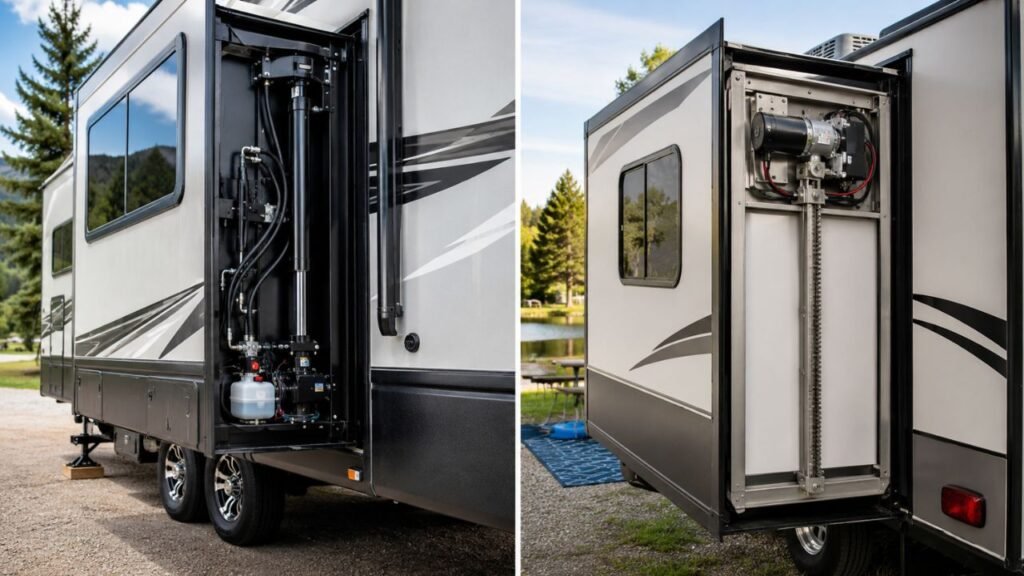
Hydraulic RV slide-outs are usually better for large, heavy rooms because they provide greater force and faster movement. Electric slide-outs generally suit smaller rooms because they are lighter, simpler, and easier to troubleshoot individually.
In this guide, I’ll compare how both systems work, their reliability, maintenance needs, repair costs, common problems, and suitability for different RVs.
Key Takeaways
- Hydraulic slides are ideal for large and heavily furnished rooms.
- Electric slides are common in smaller and lighter RVs.
- Hydraulic systems usually move heavy rooms faster and more smoothly.
- Electric systems are generally easier to inspect and troubleshoot.
- One hydraulic pump may control several different slide rooms.
- Electric slides usually have separate motors or control systems.
- Hydraulic repairs can become costly when hoses or cylinders are hidden.
- Proper sizing and maintenance matter more than the system’s name.
- Both systems depend on a healthy 12-volt electrical supply.
- Always follow your RV manufacturer’s operating and override instructions.
Hydraulic vs Electric RV Slide-Out at a Glance
Both systems can work reliably when matched correctly to the slide room. The main differences involve power, complexity, weight, speed, and repair difficulty.
| Comparison Factor | Hydraulic Slide-Out | Electric Slide-Out |
| Main power source | 12-volt pump pressurizing hydraulic fluid | 12-volt motor driving the mechanism |
| Moving mechanism | Cylinders, hoses, valves, and pressurized fluid | Gears, rails, cables, shafts, or actuators |
| Best application | Large, deep, or heavily loaded slides | Small and medium slide rooms |
| Operating speed | Usually faster | Usually slower |
| Available force | Very strong | Depends on motor and mechanism |
| Multiple slide control | One pump may serve several rooms | Each room usually operates independently |
| Failure impact | Shared failure may affect several slides | Failure often remains limited to one room |
| Maintenance needs | Fluid, hoses, fittings, cylinders, and pump | Motors, tracks, gears, cables, and wiring |
| Common problems | Leaks, low pressure, pump or valve failure | Binding, low voltage, gear wear, synchronization |
| Repair difficulty | Often requires specialized service | Frequently easier to diagnose |
| System weight | Generally heavier | Generally lighter |
| Common RV applications | Class A motorhomes and large fifth wheels | Travel trailers and smaller motorhomes |
This table gives you the basic difference. However, the actual reliability depends heavily on the slide’s design and installation.
How Does a Hydraulic RV Slide-Out Work?
A hydraulic slide uses pressurized fluid to move a piston inside a cylinder. That cylinder then pushes or pulls the slide room.
Main Hydraulic Slide-Out Components
A typical hydraulic system includes:
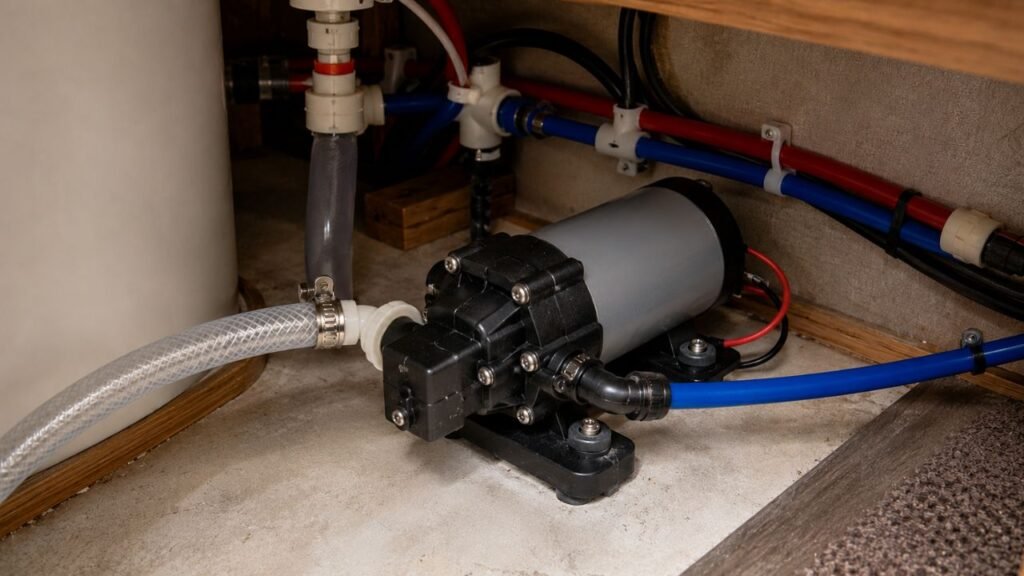
- A 12-volt electric hydraulic pump
- A hydraulic fluid reservoir
- High-pressure hydraulic hoses
- One or more hydraulic cylinders
- Directional valves or solenoids
- Electrical wiring and control switches
- Fuses, breakers, or relays
- A manual release or override system
The electric pump still needs battery power. Therefore, a hydraulic slide is not independent from your RV’s electrical system.
What Happens When You Press the Slide Switch?
Pressing the wall switch sends electrical power to the hydraulic pump. The pump then pulls fluid from the reservoir and pressurizes it.
The pressurized fluid travels through a hose toward the hydraulic cylinder. Fluid pressure moves the piston, causing the slide room to extend.
When you retract the room, the system changes the fluid’s direction. The piston moves the opposite way and pulls the room inward.
Hydraulic pressure creates substantial force without placing a large electric motor directly beside every slide. This makes hydraulics useful for large rooms containing sofas, appliances, cabinets, and kitchen equipment.
Why Can One Hydraulic Pump Operate Several Slides?
Many hydraulic systems use one pump and reservoir for several rooms. Valves control where the fluid travels when each switch is pressed.
This centralized design saves space compared with installing separate pumps everywhere. It also allows manufacturers to power several heavy rooms efficiently.
However, shared equipment creates an important disadvantage. A failed pump, electrical relay, fuse, or major fluid leak may disable several slides at once.
How Does an Electric RV Slide-Out Work?
An electric slide uses a 12-volt motor to move gears, rails, cables, or mechanical actuators. Different electric systems can look and behave very differently.
Main Electric Slide-Out Components
Depending on the design, an electric system may include:
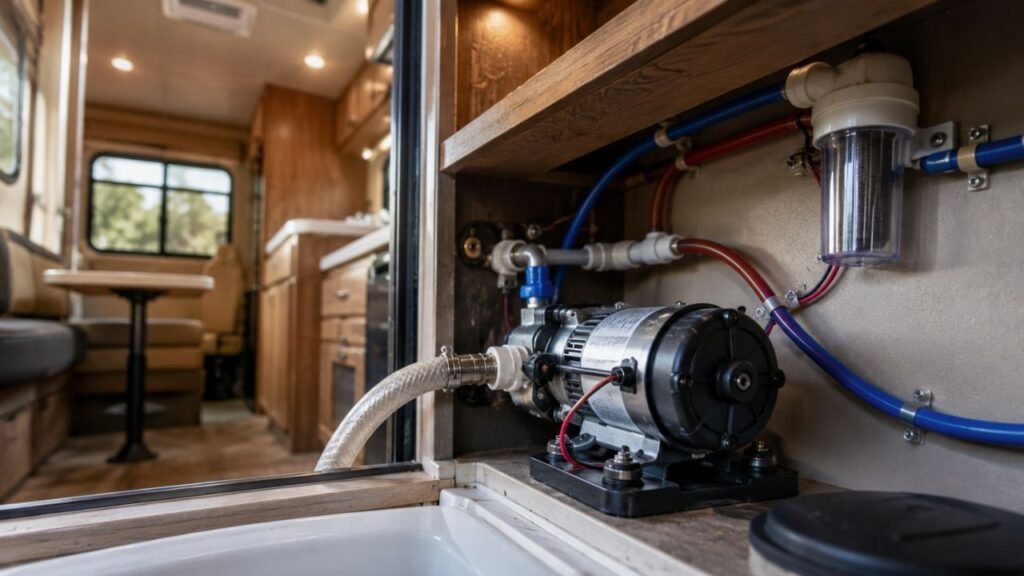
- One or two 12-volt motors
- A gearbox or electric actuator
- Rack-and-pinion rails
- Drive shafts and connecting gears
- Cables and pulleys
- In-wall rails or columns
- A synchronization controller
- Fuses, breakers, switches, and wiring
Some electric systems use one motor underneath the room. Others place separate motors on both sides of the slide.
Rack-and-Pinion Electric Slides
A rack-and-pinion slide normally uses toothed metal rails beneath the room. A motor turns gears that travel along those rails.
A drive shaft may connect both sides of the room. This helps each side move at approximately the same speed.
These systems can move medium or relatively heavy slides when designed correctly. They are often sturdy, but worn gears or damaged teeth can create popping and skipping noises.
In-Wall Electric Slides
In-wall systems usually have vertical rails mounted beside the slide room. Small motors near the upper corners move both sides of the room.
These systems save space beneath the slide. They are commonly used for lightweight or shallower rooms.
Both motors must remain synchronized. When one side moves differently, the room may twist, bind, or stop before fully closing.
Cable-Driven Electric Slides
Cable slide-outs use electric motors, pulleys, and several visible cables. The cables pull the room inward or outward.
Cable systems are relatively lightweight and can work well for tall slides. Their components are often easier to see than hidden hydraulic lines.
However, stretched cables, incorrect tension, or pulley problems can make the room move unevenly.
What Are the Main Differences Between Hydraulic and Electric Slides?
The systems differ most in force, speed, complexity, system weight, and how failures affect the RV.
Power and Slide Weight Capacity
Hydraulic systems can produce substantial force. They are commonly chosen for deep, heavy, or full-wall slide rooms.
A large kitchen slide may contain countertops, cabinets, appliances, seating, and storage. Moving that much weight requires a properly designed system.
Electric slide-outs can also move sizable rooms. However, the motor, rails, and gears must be rated for the room’s actual load.
Problems often appear when owners store excessive weight inside a slide. Even a strong mechanism can struggle when overloaded repeatedly.
Extension and Retraction Speed
Hydraulic slides usually move faster than comparable electric systems. The difference becomes more noticeable with large rooms.
Electric slides often move more slowly because the motor turns gears or cables through a controlled mechanical system.
Faster movement is convenient, but speed alone does not determine quality. Smooth, even travel matters more than saving several seconds.
Noise During Operation
Hydraulic pumps usually produce a noticeable humming or whining sound. The pump may become louder when pressure increases near full extension.
Electric systems produce motor, gear, or cable noises. A healthy system may hum, click lightly, or make consistent mechanical sounds.
Neither system is always quieter. Noise depends on the mechanism, installation, lubrication, room weight, and condition.
A new grinding, snapping, or harsh popping sound deserves immediate attention.
Independent Slide Control
Electric slide rooms usually have separate motors and controls. A failed bedroom slide may not affect the living-room slide.
Hydraulic rooms often share the same pump and reservoir. Separate valves direct fluid toward each cylinder.
The shared hydraulic arrangement is efficient, but it creates a common failure point. One pump problem may prevent several rooms from moving.
System Weight and Installation Space
Hydraulic systems need a pump, reservoir, hoses, fittings, cylinders, and mounting hardware. These components add weight and require installation space.
Electric systems usually avoid the central reservoir and hydraulic hoses. This can make them more practical for lighter RV designs.
However, electric mechanisms still require motors, rails, shafts, controllers, and structural supports. They are not weightless or maintenance-free.
Electrical Power Use
Both systems normally depend on your RV’s 12-volt electrical supply.
A hydraulic system uses electricity to operate its pump. The pump then creates hydraulic pressure.
An electric system sends battery power directly to the slide motor. The motor drives gears, cables, or rails.
The actual electrical draw depends on room weight and resistance. A struggling slide can pull significantly more current than a healthy one.
Pros and Cons of Hydraulic RV Slide-Outs
The hydraulic systems provide impressive force, but that strength comes with additional components and maintenance responsibilities.
Hydraulic Slide-Out Advantages
- Moves large and heavily furnished rooms
- Generally operates faster than electric systems
- Can power several slides from one pump
- Provides strong movement throughout the slide’s travel
- Works well for deep or full-wall rooms
- Handles frequent operation when correctly maintained
- Keeps large motors away from individual slide rooms
Hydraulic Slide-Out Disadvantages
- Hydraulic fluid can leak from hoses or fittings
- Concealed hoses may be difficult to access
- Pump failure may disable several slide rooms
- Cylinder repairs may require professional service
- Air or low fluid can reduce performance
- The system adds weight to the RV
- Repair labor can become expensive
- Incorrect fluid may damage seals or components
- A leaking system can create a messy cleanup
These hydraulic systems are not necessarily unreliable. They simply have more fluid-related components that require inspection.
Pros and Cons of Electric RV Slide-Outs
Electric systems are widely used because they fit many RV sizes. They also allow manufacturers to operate each room independently.
Electric Slide-Out Advantages
- No hydraulic fluid or high-pressure hoses
- Individual failures are often easier to isolate
- Motors and wiring may be easier to inspect
- Generally lighter than hydraulic systems
- Suitable for smaller and medium slide rooms
- Often simpler for owners to troubleshoot
- Common replacement components may be readily available
- Many systems include accessible manual overrides
Electric Slide-Out Disadvantages
- Motors can struggle with excessive room weight
- Low voltage can cause slow or uneven movement
- Gears and tracks may bind when misaligned
- Two-motor systems can lose synchronization
- Cable systems may require tension adjustments
- Electric slides are often slower
- Motors may overheat under repeated strain
- Damaged rails can require extensive repairs
An electric slide is not automatically simple. In-wall controllers and synchronized motors can still require careful diagnosis.
Which RV Slide-Out System Is More Reliable?
Neither system wins every reliability comparison. The most reliable setup is properly sized, correctly installed, and regularly maintained.
Hydraulic systems are dependable when handling heavy loads. Their cylinders provide strong and consistent movement.
However, hydraulic hoses, seals, pumps, valves, and fittings create several possible failure points. A shared component can also affect multiple rooms.
Electric systems avoid fluid leaks and centralized hydraulic equipment. A problem may remain limited to one individual room.
Still, an undersized motor or misaligned track can fail repeatedly. Lightweight electric systems should not be expected to move heavily overloaded rooms.
The slide room’s construction matters as much as the mechanism. Floor damage, frame movement, and water intrusion can make either system bind.
Your operating habits also influence reliability. A slide repeatedly moved with weak battery voltage will experience unnecessary stress.
For most owners, correct system sizing matters more than choosing hydraulic or electric.
Which System Is Easier to Maintain?
Electric systems are often easier for owners to inspect. Hydraulic systems require additional checks involving fluid and pressurized components.
Hydraulic Slide-Out Maintenance
Regular hydraulic maintenance may include:
- Checking the reservoir’s fluid level
- Inspecting hoses for cracks or rubbing
- Looking for wet fittings and cylinder seals
- Checking the pump’s electrical connections
- Watching for fluid beneath storage compartments
- Listening for changes in pump noise
- Verifying that mounting bolts remain secure
- Using only the manufacturer-approved fluid
- Learning the emergency retraction procedure
Do not automatically add fluid whenever the level looks low. The proper reading may depend on whether the slides are extended or retracted.
Overfilling the reservoir can cause fluid to escape during operation. Always follow your specific system’s instructions.
Electric Slide-Out Maintenance
Regular electric slide maintenance may include:
- Keeping the house battery properly charged
- Inspecting motors, gears, rails, and shafts
- Removing dirt from exposed tracks
- Checking wiring and ground connections
- Watching both sides during operation
- Inspecting cables for fraying or looseness
- Tightening accessible mounting hardware
- Following the correct synchronization procedure
- Lubricating only approved components
- Testing the manual override before an emergency
Some slide manufacturers discourage wet or greasy lubricants on certain rails. Those products can collect dust and increase wear.
Always confirm the lubrication requirements for your exact mechanism.
Which Slide-Out System Costs More to Repair?
Hydraulic repairs are often more expensive because diagnosis and access can be difficult. However, complex electric repairs can also become costly.
A loose hydraulic fitting may be relatively inexpensive to correct. A hidden hose running through the RV can require substantial labor.
Cylinder replacement or rebuilding may also require specialized tools. Pump and valve assemblies can add significant parts costs.
Electric problems are often more localized. Replacing a fuse, switch, motor, or loose connection may be straightforward.
However, complete in-wall rail replacement can involve removing trim or partially removing the room. Structural misalignment can make the job even larger.
Labor access often affects the bill more than the damaged component. A cheap part hidden behind cabinetry can require hours of work.
Before approving a major repair, ask what caused the failure. Replacing a motor without correcting room resistance may lead to another failure.
Common Hydraulic Slide-Out Problems
Hydraulic slide problems generally involve fluid loss, pressure loss, electrical failure, or mechanical resistance.
Hydraulic Fluid Leaks
Leaks commonly appear around hose fittings, pump seals, cylinders, and damaged lines. Look for oily residue or wet areas near hydraulic components.
A slow leak may reduce the reservoir level gradually. Eventually, the slide may move slowly, stop early, or behave inconsistently.
Do not place your hands around a pressurized leak. High-pressure hydraulic fluid can penetrate skin and cause serious injury.
Switch the system off and have a suspected pressurized leak inspected safely.
Slide Moves Slowly or Stops
Slow movement may result from low fluid, weak battery voltage, pump wear, or a restricted hose.
The room may also be binding mechanically. Misalignment, floor damage, debris, or excessive weight can create resistance.
Check battery condition before blaming the hydraulic pump. A pump receiving low voltage cannot produce normal performance.
Stop operating the slide if one side twists or moves abnormally. Continuing may damage the room or seals.
Pump Runs but the Room Does Not Move
A running pump without room movement may indicate low fluid or an open manual release valve.
A directional valve or solenoid may also be stuck. A disconnected cylinder or internal seal problem can prevent movement.
First, stop holding the switch continuously. Running the pump without movement can overheat the motor.
Check the manual for the proper valve and override positions. Do not randomly loosen hydraulic fittings.
Several Slides Stop Working Together
When several hydraulic slides fail together, look for a shared problem.
Possible causes include:
- A discharged house battery
- A tripped breaker
- A blown fuse
- A failed pump motor
- A faulty pump relay
- Low hydraulic fluid
- A major system leak
- A defective shared control module
A simultaneous failure often points toward the pump or electrical supply. It is less likely that several cylinders failed separately.
Common Electric Slide-Out Problems
Electric slide failures often involve low voltage, binding, worn components, or synchronization problems.
Motor Clicks but the Slide Does Not Move
A clicking motor may be receiving some electrical power without enough voltage. Check the house battery before forcing the switch.
Loose battery connections and weak grounds can create similar symptoms. A breaker or controller may also interrupt power.
Mechanical binding is another possibility. The motor may be unable to overcome a jammed track or overloaded room.
Do not repeatedly press the switch when the slide remains stuck. Repeated attempts can overheat the motor or damage gears.
One Side Moves Faster Than the Other
Uneven movement is common in two-motor systems that have lost synchronization.
It can also result from damaged gears, increased rail resistance, loose cables, or a weak motor.
Stop immediately if the room begins twisting severely. Continuing may damage the sidewall, seals, floor, or drive components.
Some systems have a specific resynchronization process. Follow that procedure exactly rather than guessing.
Slide Stops Before Fully Opening or Closing
Low battery voltage can cause the motor to stop under increasing resistance. Obstructions can create the same problem.
Check beneath furniture, rugs, cabinets, and interior trim. Even a small object can prevent complete closure.
A controller fault, damaged gear, incorrect limit setting, or misaligned room may also stop travel.
Do not assume the motor needs replacement. Find the resistance causing the motor to struggle.
Grinding, Popping, or Clicking Sounds
Grinding often suggests gear wear, damaged track teeth, or misalignment. Popping can occur when gears skip under pressure.
Cable systems may click when tension is incorrect. Loose mounting hardware can also create unexpected noises.
Some operating noise is normal. A new or rapidly worsening sound is not.
Stop using the room until you identify the source. Early inspection may prevent a more expensive failure.
How to Identify Whether Your RV Slide Is Hydraulic or Electric
Do not assume your slide is hydraulic because your RV has hydraulic leveling jacks. Manufacturers may use hydraulics for leveling and electricity for slides.
Use these checks to identify your slide mechanism:
- Look beneath the room for hydraulic cylinders.
- Check whether hydraulic hoses connect to those cylinders.
- Find a hydraulic pump and fluid reservoir.
- Look for toothed rails and gears beneath the room.
- Check for vertical rails on both slide-room walls.
- Look for visible cables near the slide’s upper corners.
- Listen for a centralized hydraulic pump during operation.
- Find the mechanism’s label or model number.
- Review the RV owner’s manual.
- Contact the manufacturer using the RV’s VIN.
The pump and reservoir may be located inside a front storage compartment. Electric motors can sit beneath the room or above its side rails.
Never crawl beneath an unsupported slide room. A sudden movement can cause severe crushing injuries.
Hydraulic or Electric: Which Is Better for Different RV Types?
Manufacturers select slide mechanisms based on room weight, depth, available space, and the RV’s structure.
Travel Trailers
Electric systems are common in travel trailers because they are relatively lightweight. They also fit smaller rooms and simpler floor plans.
Rack-and-pinion, cable, and in-wall systems are frequently used. The appropriate design depends on the room’s size and contents.
A large travel-trailer kitchen slide may still need a stronger mechanism. Never judge the system only by the RV category.
Fifth Wheels
Fifth wheels often contain several different slide sizes. Therefore, one RV may even use more than one mechanism type.
A smaller bedroom slide may use an electric in-wall system. A large kitchen or living-room slide may use rack-and-pinion or hydraulics.
Hydraulic systems become attractive when several heavy rooms need dependable force.
Class A Motorhomes
Large Class A motorhomes often use hydraulic systems for substantial slide rooms. Full-wall slides need significant force and structural support.
Some Class A coaches still use electric mechanisms. The final choice depends on the manufacturer’s engineering and floor plan.
For buyers, access to pumps, hoses, motors, and overrides is especially important. Large-coach repairs can become costly when components are hidden.
Class C Motorhomes
Electric systems are common in Class C motorhomes. Many Class C slides are smaller than those found in large diesel coaches.
However, full-wall Class C slides can still be heavy. The mechanism must match the room’s size and loaded weight.
Inspect the slide carefully when buying a used Class C. Uneven movement can signal existing wear or alignment problems.
Lightweight and Small RVs
Electric systems normally make more sense in lightweight RVs. A hydraulic pump and reservoir would add unnecessary complexity and weight.
Small in-wall, cable, or compact rack systems can provide sufficient movement. They also require less installation space.
The lighter system still needs proper maintenance. Small motors can fail quickly when the room binds.
Which System Is Better for Full-Time RV Living?
Full-time use increases the number of times your slides move. It also increases the amount of belongings stored inside them.
Hydraulic systems can be an excellent choice for heavy kitchen and living slides. Their available force suits large rooms used every day.
Electric systems may be preferable when you want independent operation. A failure affecting one room might leave the others usable.
Service availability should also influence your decision. A specialized hydraulic problem may require a technician familiar with that system.
Electric parts can sometimes be easier to identify and replace. However, complicated in-wall repairs may still need professional assistance.
For full-time living, choose a system properly matched to the room. Then keep its components accessible, clean, and regularly inspected.
Which System Is Better for Boondocking?
Both systems require reliable 12-volt power. Neither should be operated repeatedly from a severely discharged house battery.
Hydraulic slides use electricity to run the pump. Electric slides use electricity to run motors directly.
The amount of consumed energy is usually small compared with daily appliances. However, the short current draw can be substantial.
A weak battery may show normal voltage without a load. That voltage can collapse when the slide motor starts.
Keep batteries charged before moving your slides. Follow manufacturer instructions regarding shore power, generators, or engine operation.
Some motorhomes recommend running the engine during slide operation. Others require the engine to remain off.
Use the procedure written for your specific RV. A general recommendation should never replace the owner’s manual.
What to Check Before Operating Any RV Slide-Out
A short inspection before every movement can prevent expensive damage. It also helps you notice developing problems early.
Before operating any slide-out:
- Confirm enough clearance outside the RV.
- Check for trees, posts, pedestals, and nearby vehicles.
- Level or stabilize the RV as directed.
- Move chairs, rugs, and belongings from the slide path.
- Check cabinets and drawers near the room.
- Remove branches, snow, ice, and debris from the roof.
- Verify that the house battery is properly charged.
- Keep children and pets away from the mechanism.
- Watch both sides while the room moves.
- Listen for new grinding or popping sounds.
- Stop if the room twists or hesitates badly.
- Check the seals after fully extending or retracting.
Do not operate a slide blindly because it worked yesterday. A fallen object or frozen seal can create a new obstruction.
Mistakes That Shorten RV Slide-Out Life
Many slide failures develop through repeated strain. Avoiding several common mistakes can extend the system’s service life.
- Operating the slide with a weak battery
- Moving the slide while the RV frame is twisted
- Storing excessive weight inside the room
- Ignoring uneven or jerky movement
- Continuing after hearing grinding or popping
- Using an unapproved lubricant
- Allowing dirt to collect along seals and tracks
- Retracting the room over ice or debris
- Holding the switch after abnormal movement
- Forcing a room that has stopped
- Ignoring water intrusion around the slide
- Delaying repairs to damaged seals
- Guessing at manual override procedures
- Allowing untrained people to loosen hydraulic fittings
Pay attention to small changes. A slide rarely improves after it begins moving unevenly.
Can You Convert a Hydraulic Slide-Out to Electric?
Converting a hydraulic slide to electric is technically possible in some custom projects. However, it is rarely a simple or economical upgrade.
The new system must match the room’s weight, dimensions, travel distance, and structural mounting points.
The RV may need new rails, motors, controllers, wiring, brackets, and framing. Existing hydraulic components must also be removed or isolated.
Incorrect geometry can make the room bind or seal poorly. The conversion could also affect structural integrity and warranty coverage.
For most owners, repairing the original system is more practical. A conversion should be treated as an engineered professional project.
Hydraulic vs Electric RV Slide-Out: Final Verdict
Hydraulic RV slide-outs are generally the better choice for large, heavy rooms. They deliver substantial force and usually move those rooms quickly.
Electric systems are often better for smaller and medium slides. They are lighter, easier to isolate, and frequently simpler to troubleshoot.
However, the mechanism’s name does not guarantee reliability. A properly designed electric system can outlast a poorly installed hydraulic system.
Choose based on room weight, component access, service availability, and maintenance comfort. During a used-RV inspection, watch the actual room operate several times.
Smooth, even movement matters more than marketing claims. The right system should move the room without twisting, straining, or making harsh noises.
Related FAQs
Are Hydraulic RV Slide-Outs Better Than Electric Ones?
Hydraulic slides are generally better for large and heavily loaded rooms, while electric systems are often more practical for smaller slides and easier individual troubleshooting.
Do Hydraulic RV Slides Use the House Battery?
Yes, most hydraulic slide systems use the house battery to power an electric pump, which pressurizes the hydraulic fluid and moves the room.
Can Low Battery Voltage Stop an RV Slide-Out?
Yes, low voltage can slow, stop, or unevenly move either system because hydraulic pumps and electric slide motors both need strong 12-volt power.
Can One Hydraulic Leak Stop Every Slide?
A major leak can reduce pressure throughout a shared system, potentially preventing several hydraulic slides from operating correctly.
Can One Electric Slide Fail Without Affecting the Others?
Yes, electric slides often use separate motors and circuits, so one room may fail while the other slides continue working normally.
Should I Lubricate My RV Slide-Out Tracks?
Lubrication depends on the exact mechanism, and some manufacturers discourage greasy products because they attract dirt and increase component wear.
Which RV Slide-Out System Is Quieter?
Noise depends on the specific design and condition, since hydraulic pumps whine while electric motors, gears, and cables produce mechanical sounds.
Can I Manually Retract Hydraulic and Electric Slides?
Most systems provide an emergency retraction method, but the procedure varies widely, so follow the instructions for your exact slide mechanism.
Is It Safe to Use a Slide-Out When the RV Is Unlevel?
Operating a slide on an improperly positioned RV can cause binding or uneven movement, so follow the manufacturer’s leveling and operating requirements.
How Long Should an RV Slide-Out System Last?
A slide system can last many years when correctly installed, properly loaded, regularly inspected, and repaired promptly after developing alignment or moisture problems.
Why Does My RV Slide Move Slowly?
A slow slide may have weak battery voltage, excessive weight, mechanical resistance, motor wear, low hydraulic fluid, or a developing alignment problem.
Can I Leave My RV Slide-Out Extended for Months?
You can leave many slide-outs extended during longer stays, but inspect the roof, seals, supports, weather exposure, and manufacturer recommendations regularly.
Should I Use Slide-Out Supports?
Most RV slide rooms are designed to support themselves, and improperly adjusted supports may damage the room when the RV settles or moves.
Can I Walk Inside My RV While the Slide Is Moving?
Keep everyone away from moving slide rooms because furniture, flooring, seals, and mechanical parts can create pinching or crushing hazards.
Why Does My Slide-Out Stop and Start?
Intermittent movement may result from weak voltage, loose wiring, thermal protection, controller faults, excessive resistance, or failing electrical components.

David Marshall shares travel route insights, mileage planning tips, and road-tested advice. His writing helps travelers understand distance, timing, and equipment choices. Every article is built around clarity and real-world usefulness.