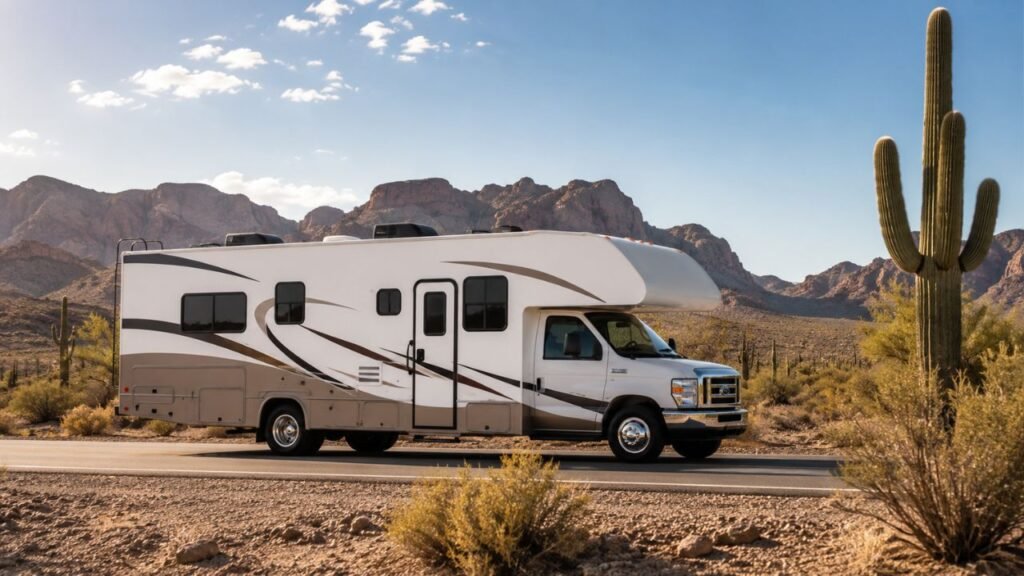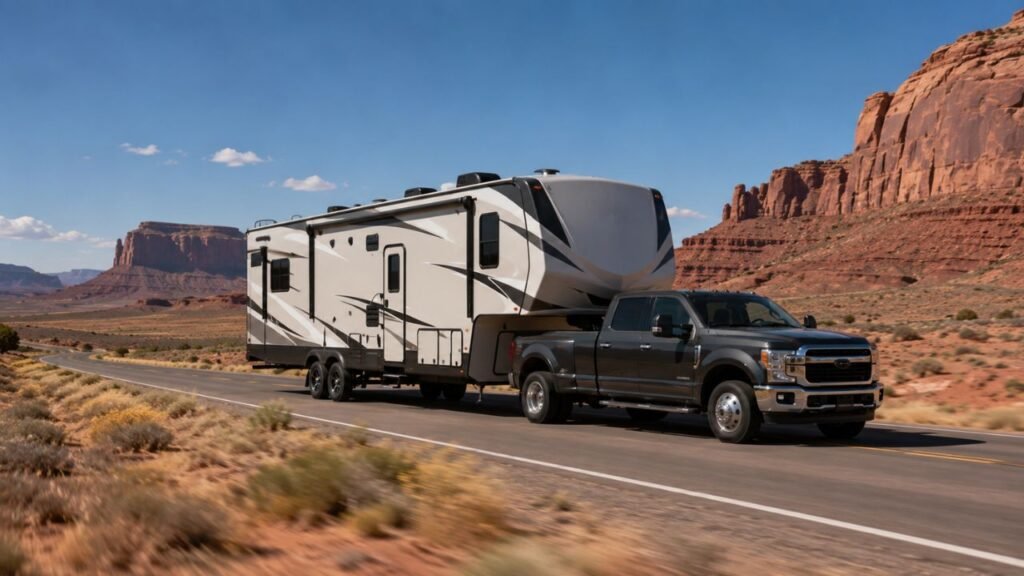
Towing and maintaining a travel trailer or fifth wheel requires a properly matched tow vehicle, correctly rated hitch equipment, balanced cargo, careful driving, and regular inspections. You must stay within every weight rating while maintaining the tires, brakes, bearings, hitch, roof, seals, and essential RV systems.
This guide covers the complete process from hitching and towing to campsite setup, routine maintenance, storage, and common problems. You will also learn how travel trailers and fifth wheels differ on the road.
Key Takeaways
- Never choose a trailer using tow capacity alone.
- Check payload, axle, hitch, and combined weight limits.
- Tongue weight and pin weight reduce available vehicle payload.
- Follow a consistent hookup checklist before every towing trip.
- Test trailer brakes, lights, tires, and connections before leaving.
- Drive slower and leave more stopping distance while towing.
- Inspect seals, bearings, brakes, tires, and suspension regularly.
- Follow the manuals for every installed RV component.
- Stop towing when handling, braking, or tire problems appear.
Travel Trailer vs. Fifth Wheel: What Is the Difference?
Travel trailers and fifth wheels are both towable RVs. However, their hitch locations, truck requirements, turning behavior, and maintenance needs are different.
| Feature | Travel Trailer | Fifth Wheel |
| Hitch location | Behind the tow vehicle | Inside the pickup bed |
| Connection | Coupler and hitch ball | Kingpin and fifth-wheel hitch |
| Typical tow vehicle | Pickup or properly rated SUV | Pickup truck |
| Weight on vehicle | Tongue weight | Pin weight |
| Bed storage | Usually remains available | Partly occupied by the hitch |
| Turning pattern | Follows behind the vehicle | Tracks farther inside turns |
| Common stability equipment | Weight distribution and sway control | Fifth-wheel hitch setup |
| Main hitch maintenance | Ball, coupler, chains, spring bars | Jaws, plate, kingpin, rails |
A travel trailer normally connects to a frame-mounted receiver hitch. It should not be connected to an ordinary bumper unless that bumper is specifically rated for towing.
A fifth wheel connects through a large hitch installed inside the truck bed. This connection places more trailer weight directly over the truck’s rear axle.
Fifth wheels often feel more stable during highway towing. Travel trailers provide more tow-vehicle options and preserve the truck bed.
Neither design is automatically safer than the other. Correct loading, equipment, maintenance, and driving matter much more.
Know Your Weight Ratings Before Towing
Tow capacity is only one part of a safe combination. You must check every rating after loading passengers, equipment, water, fuel, food, and personal belongings.
Gross Vehicle Weight Rating
Gross Vehicle Weight Rating, or GVWR, is the maximum permitted loaded weight.
Your tow vehicle and trailer each have their own GVWR. Neither one should exceed the rating shown by its manufacturer.
The tow vehicle’s loaded weight includes:
- The driver
- Passengers
- Fuel
- Cargo
- Accessories
- Hitch equipment
- Tongue or pin weight
The trailer’s loaded weight includes everything inside or attached to it.
Gross Axle Weight Rating
Gross Axle Weight Rating, or GAWR, is the maximum weight allowed on an axle.
Your tow vehicle normally has separate front and rear axle ratings. Your trailer may also have one or more rated axles.
A vehicle can remain below its GVWR while overloading one axle. Fifth-wheel owners should watch the truck’s rear axle especially closely.
Gross Combined Weight Rating
Gross Combined Weight Rating, or GCWR, covers the complete loaded combination.
It includes the tow vehicle, trailer, passengers, cargo, fluids, and equipment. Staying below this rating helps protect the drivetrain, brakes, and handling.
Payload Capacity
Payload capacity is the weight your tow vehicle can carry.
Many owners focus on advertised tow capacity while ignoring payload. However, payload often becomes the limiting factor first.
Payload commonly includes:
- Passengers
- Tools
- Coolers
- Cargo
- Truck accessories
- Hitch equipment
- Travel-trailer tongue weight
- Fifth-wheel pin weight
A heavy fifth-wheel hitch can use a noticeable amount of payload before coupling.
Tongue Weight and Pin Weight
Tongue weight is the downward force a travel trailer places on its hitch.
Many travel trailers handle best when tongue weight equals roughly 10% to 15% of their loaded weight. However, you must follow your trailer and hitch instructions.
Too little tongue weight can increase trailer sway. Too much can overload the tow vehicle’s rear axle or receiver.
Pin weight is the force a fifth wheel places inside the truck bed. It often represents roughly 15% to 25% of the loaded trailer weight.
A large fifth wheel can therefore require substantial truck payload. An advertised tow rating does not guarantee enough payload capacity.
Dry Weight vs. Loaded Trailer Weight
Dry weight describes the trailer before most travel supplies are added.
It may exclude or underestimate items such as:
- Fresh water
- Wastewater
- Propane
- Batteries
- Food
- Clothing
- Camping gear
- Dealer-installed accessories
- Personal equipment
Water weighs roughly 8.3 pounds per gallon. A full freshwater tank can add several hundred pounds.
Use the actual loaded weight whenever possible. Brochure numbers cannot show exactly how you travel.
How to Weigh Your Tow Vehicle and Trailer
A public vehicle scale provides the most dependable weight information.
Use this basic process:
- Load the trailer exactly as you plan to travel.
- Include passengers, fuel, tools, food, and normal supplies.
- Decide how much water you normally carry.
- Weigh the loaded tow vehicle without the trailer.
- Weigh the complete connected combination.
- Record individual axle weights when available.
- Compare every measurement with its official rating.
- Rearrange or remove cargo when any limit is exceeded.
- Reweigh after making major loading changes.
Do not simply subtract trailer weight from advertised tow capacity. You must compare each axle, payload, hitch, and combined limit separately.
Choose the Correct Towing Equipment
Every towing component must match the trailer and tow vehicle. The lowest-rated part can limit the entire towing system.
Travel Trailer Receiver, Ball Mount, and Coupler
A travel trailer usually needs a frame-mounted receiver hitch.
The receiver, ball mount, hitch ball, and coupler must all match. Check both dimensions and weight ratings before towing.
Confirm the following details:
- Receiver opening size
- Receiver weight rating
- Ball-mount rating
- Hitch-ball diameter
- Hitch-ball weight rating
- Coupler size
- Hitch height
- Hitch pin and retaining clip
The trailer should sit reasonably level when connected. A noticeably nose-high or nose-low trailer may handle poorly.
Weight-Distribution Hitch
A weight-distribution hitch helps transfer some tongue weight toward the vehicle’s front axle and trailer axles.
It can reduce rear suspension sag and improve steering response. It may also improve braking control when properly adjusted.
You may need one when:
- The vehicle manufacturer requires it.
- The receiver has separate distributed weight ratings.
- The trailer creates excessive rear sag.
- Steering feels light after coupling.
- The loaded tongue weight is substantial.
Do not assume every trailer needs the same spring bars. Spring-bar capacity must suit the actual loaded tongue weight.
Changing cargo or adding batteries can alter hitch adjustment. Recheck the setup after major modifications.
Sway-Control Equipment
Sway control helps resist side-to-side trailer movement.
Common designs include friction sway bars and integrated weight-distribution systems. Some tow vehicles also include electronic trailer stability features.
Sway control cannot fix:
- Excessive speed
- Insufficient tongue weight
- Overloaded tires
- Loose cargo
- Incorrect tire pressure
- Bent suspension parts
- Poor hitch adjustment
Treat sway control as added protection, not a substitute for proper loading.
Fifth-Wheel Hitch
A fifth-wheel hitch must support the trailer’s loaded weight and pin weight.
The hitch must also match the truck bed, mounting system, and kingpin design.
Important considerations include:
- Gross trailer weight rating
- Vertical pin-weight rating
- Factory puck or rail system
- Truck-bed length
- Cab clearance
- Tailgate clearance
- Hitch-jaw design
- Kingpin compatibility
- Fixed or sliding operation
Short-bed trucks may require a sliding hitch or specialized pin box. Never assume cab clearance is adequate without checking.
Brake Controller and Trailer Brakes
Most larger towable RVs have their own electric brakes.
A brake controller sends an adjustable braking signal from the tow vehicle. The trailer brakes should engage smoothly without locking or pushing the vehicle.
Two common controller types are:
- Proportional controllers: Match braking force to vehicle deceleration.
- Time-delayed controllers: Increase braking output over a selected period.
Set the controller using its instructions. Test the brakes at low speed before joining traffic.
The manual control can help test brake response. It may also help control mild sway when used correctly.
Breakaway System
The breakaway system applies the trailer brakes if separation occurs.
It normally includes:
- A breakaway switch
- A pull cable
- A charged battery
- Trailer brake wiring
Attach the cable to a secure point on the tow vehicle. Do not wrap it around the hitch ball or attach it to a removable component.
The cable should remain free enough for turning. However, it should not drag along the road.
Electrical Connector, Mirrors, and Cameras
Most modern travel trailers and fifth wheels use a seven-way connector.
This connection can operate:
- Brake lights
- Turn signals
- Running lights
- Electric trailer brakes
- Reverse lights
- Battery charging circuits
Inspect the plug for corrosion, bent contacts, loose wiring, and moisture.
Extended tow mirrors improve visibility along the trailer’s sides. A rear camera can also help with traffic, parking, and backing.
Do not depend completely on cameras. Mirrors remain essential when electronics fail.
Tire-Pressure Monitoring System
A trailer tire-pressure monitoring system can provide early warning of tire problems.
Many systems display:
- Current tire pressure
- Tire temperature
- Rapid pressure loss
- High-temperature warnings
A monitoring system cannot replace manual inspections. However, it may alert you before a small leak becomes destructive.
How to Hitch a Travel Trailer Safely
A repeatable hookup process reduces forgotten steps. Follow the same order whenever you connect your travel trailer.
- Park both vehicles on firm and level ground.
- Chock the trailer wheels before moving the tow vehicle.
- Inspect the receiver, ball, coupler, and mounting hardware.
- Raise the coupler slightly above the hitch ball.
- Back the tow vehicle slowly into alignment.
- Lower the coupler completely onto the hitch ball.
- Close the coupler latch and install its safety pin.
- Raise the tongue slightly to confirm proper engagement.
- Lower the tongue again after checking the connection.
- Install the weight-distribution spring bars when required.
- Attach the sway-control equipment according to its instructions.
- Attach the safety chains to approved connection points.
- Cross the chains when required by the equipment instructions.
- Connect the breakaway cable to an independent secure point.
- Insert the trailer’s electrical plug completely.
- Retract the tongue jack and secure its foot.
- Remove the wheel chocks when everything else is ready.
- Test the trailer brakes at low speed.
- Test running lights, brake lights, and turn signals.
- Complete one final walk-around before entering traffic.
Never place your hands between the hitch ball and coupler. Keep other people clear while the tow vehicle is moving.
How to Hitch a Fifth Wheel Safely
Fifth-wheel hookup mistakes can cause expensive truck-bed damage. Visual confirmation and a pull test are both important.
- Park the trailer on firm and reasonably level ground.
- Chock the trailer wheels securely.
- Inspect the kingpin, pin box, and hitch.
- Open the hitch jaws using the manufacturer’s procedure.
- Adjust the landing gear to the correct coupling height.
- Position the pin box slightly below the hitch plate.
- Lower the truck tailgate when necessary.
- Align the truck directly with the trailer.
- Back slowly until the kingpin enters the hitch.
- Continue until the hitch jaws close completely.
- Secure the hitch handle and locking pin.
- Visually inspect the jaws around the kingpin.
- Confirm the kingpin is not sitting above the jaws.
- Connect the electrical cord and breakaway cable.
- Raise the landing gear slightly from the ground.
- Apply the trailer brakes using the controller.
- Pull forward gently to test the connection.
- Fully retract the landing gear after the test.
- Secure the landing-gear controls and pads.
- Confirm truck-bed, tailgate, and cab clearance.
- Test all trailer lights and brakes.
- Complete a final walk-around before leaving.
A high-hitch condition occurs when the kingpin rests above the hitch jaws. The connection may appear secure but can release during movement.
Complete Pre-Trip Towing Checklist
A short pre-trip inspection can prevent major road problems. Use the same checklist before every departure, including short travel days.
Tow Vehicle Checks
Inspect the tow vehicle before connecting or leaving.
- Check engine oil and coolant.
- Inspect transmission fluid when applicable.
- Check every tow-vehicle tire.
- Confirm mirrors provide adequate visibility.
- Look for dashboard warning lights.
- Secure tools and cargo.
- Check fuel or charging range.
- Confirm passenger and cargo weight.
- Verify the brake controller powers on.
- Check the receiver or bed hitch.
Hitch and Connection Checks
Walk around the hitch without rushing.
- Confirm the coupler or hitch jaws are locked.
- Install every safety pin and retaining clip.
- Check the hitch-ball or kingpin connection.
- Secure safety chains when fitted.
- Attach the breakaway cable independently.
- Insert the electrical connector fully.
- Check weight-distribution components.
- Secure sway-control equipment.
- Raise the tongue jack completely.
- Retract the fifth-wheel landing gear.
- Confirm adequate bed and cab clearance.
Trailer Exterior Checks
Inspect every side and the roofline from the ground.
- Check cold tire pressure.
- Inspect sidewalls and tread.
- Look for loose wheel fasteners.
- Confirm every light works.
- Close storage compartment doors.
- Retract exterior steps.
- Secure the awning.
- Close roof vents when required.
- Close and latch windows.
- Retract slide-outs completely.
- Raise all stabilizer jacks.
- Store water and sewer equipment.
- Lock entry doors.
- Remove campsite blocks and connections.
- Check for leaking fluids.
Trailer Interior Checks
Everything inside must remain secure during sudden stops.
- Close every cabinet.
- Lock the refrigerator doors.
- Secure the shower door.
- Remove loose countertop items.
- Restrain heavy equipment.
- Store heavier cargo low.
- Keep cargo near the axles.
- Secure televisions and movable furniture.
- Close interior doors.
- Turn off unnecessary appliances.
- Confirm nobody remains inside.
- Secure pets inside the tow vehicle.
Open one cabinet carefully after arrival. Shifting cargo may rest against the door.
How to Drive Safely While Towing
A trailer changes how your vehicle accelerates, brakes, turns, and reacts. Smooth driving gives the entire combination more time to remain stable.
Accelerate and Brake Gradually
Accelerate slowly from stops and avoid sudden throttle changes.
The additional weight makes stopping take longer. Begin braking earlier than you would without a trailer.
Avoid rapid lane changes and aggressive passing. Smooth steering and braking reduce stress on the hitch and tires.
Test the trailer brakes shortly after leaving. The trailer should help stop without jerking or pushing.
Leave More Following Distance
Leave considerably more space behind the vehicle ahead.
Your safe distance changes with:
- Speed
- Trailer weight
- Brake condition
- Road surface
- Weather
- Traffic
- Visibility
- Road slope
Do not follow a passenger-car spacing habit. You need room for gradual braking and unexpected traffic changes.
Take Wider Turns
A trailer’s wheels track inside the tow vehicle’s path.
Begin turns farther from curbs, posts, fuel pumps, and parked vehicles. Watch the inside trailer wheels through your mirrors.
Fifth wheels can cut sharply inside the truck’s turning path. They also require attention to cab and bed-rail clearance.
Change Lanes Carefully
A towing combination needs more space to change lanes.
Check both mirrors repeatedly before moving. Signal early and make a gradual steering correction.
Continue watching until the complete trailer clears nearby traffic. Do not return to the lane based only on the tow vehicle’s position.
Handle Hills and Mountain Grades
Towing on steep roads creates extra engine, transmission, and brake heat.
Use tow or haul mode when provided. Select a lower gear before beginning a long descent.
Engine braking helps control speed without continuously riding the brakes. Constant brake pressure can cause overheating and reduced stopping power.
Watch temperature gauges during long climbs. Pull over safely if temperatures rise unexpectedly.
Use designated turnouts when traffic gathers behind you. Never rush downhill because another driver seems impatient.
Tow in Wind, Rain, and Poor Weather
High-sided trailers react strongly to crosswinds and passing trucks.
Reduce speed before the wind becomes difficult to manage. Keep both hands on the steering wheel and avoid sudden corrections.
Rain reduces traction and increases stopping distance. Standing water can also pull the tow vehicle or trailer sideways.
Postpone travel when conditions become unsafe. Reaching the campsite later is better than losing control.
Plan Fuel Stops and Rest Breaks
Choose large fuel stations with open entrances and exits.
Avoid locations requiring sharp turns or difficult backing. Satellite views can help you inspect station layouts before arriving.
Take regular breaks during long travel days. Fatigue slows decision-making and increases steering mistakes.
Use each stop for a quick walk-around. Check tires, hitch parts, doors, and unusual smells.
Know Your RV’s Measurements
Keep important measurements visible near the driver.
Record the following information:
- RV height
- RV width
- Trailer length
- Combined length
- Loaded weight
- Fuel type
- Tire size
- Recommended tire pressure
Include rooftop air conditioners and antennas in your height measurement. Never guess when approaching a low bridge or fuel canopy.
What Should You Do If the Trailer Starts Swaying?
Trailer sway requires calm and controlled action. Sudden steering or braking can make the movement worse.
- Hold the steering wheel firmly.
- Keep the tow vehicle pointed straight.
- Avoid sharp steering corrections.
- Ease off the accelerator gradually.
- Do not slam the tow-vehicle brakes.
- Apply trailer brakes manually when appropriate.
- Allow the combination to slow naturally.
- Pull over when a safe location appears.
- Inspect the trailer before continuing.
- Reduce speed after correcting the cause.
Possible causes of sway include:
- Excessive speed
- Insufficient tongue weight
- Cargo loaded too far rearward
- Shifting cargo
- Crosswinds
- Passing trucks
- Incorrect tire pressure
- Worn tires
- Loose hitch equipment
- Poor weight-distribution adjustment
- Damaged suspension parts
Do not continue driving through repeated sway. A trailer that remains unstable needs immediate inspection.
How to Back a Travel Trailer or Fifth Wheel
Backing becomes easier with practice and small corrections. Choose an open practice area before attempting a crowded campsite.
Practice Before Your First Trip
Use an empty parking area with visible cones.
Practice:
- Backing straight
- Turning in both directions
- Correcting trailer angle
- Pulling forward to reset
- Watching both trailer corners
- Stopping before obstacles
Practice with the same tow vehicle and trailer you will use.
Use Small Steering Corrections
Large steering movements cause the trailer to turn quickly.
Make a small correction and wait for the trailer to respond. Return the steering wheel toward center before the angle becomes excessive.
Pull forward whenever the setup becomes awkward. Resetting is safer than forcing a bad approach.
Back Toward the Driver’s Side When Possible
Backing toward the driver’s side usually provides better visibility.
You can see the trailer’s inside path more clearly through the driver’s window and mirror.
Passenger-side backing creates a larger blind area. Use extra spotter assistance when that direction cannot be avoided.
Use a Spotter
Agree on simple signals before backing.
The spotter should:
- Remain visible to the driver.
- Stand away from the trailer’s path.
- Watch low and high obstacles.
- Monitor both trailer corners.
- Signal clearly and slowly.
- Tell the driver to stop when uncertain.
Stop immediately when you lose sight of the spotter. Never assume they have moved somewhere safe.
Use the Get Out and Look Method
Stop and inspect the area as often as needed.
Check:
- Tree branches
- Utility pedestals
- Picnic tables
- Roof clearance
- Slide-out clearance
- Awning clearance
- Trailer corners
- Tire position
- Ground slope
Experienced drivers still get out and look. Careful checking is not a sign of inexperience.
How to Unhitch and Set Up at the Campsite
Correct campsite setup protects the frame, tires, jacks, and interior systems. Level the trailer before extending slides or stabilizers.
Position and Level the Trailer
Inspect the campsite before backing into position.
Look for:
- Soft ground
- Deep holes
- Low branches
- Utility locations
- Drainage problems
- Slide clearance
- Awning clearance
- Sewer connection distance
Level a towable RV from side to side before unhitching. Place rated blocks beneath the low-side tires when needed.
Chock the wheels securely after reaching the correct position. Then level the trailer from front to back.
Use jack pads on soft soil, gravel, or hot asphalt. Pads distribute weight and reduce sinking.
Unhitch a Travel Trailer
Follow this general order:
- Park on firm ground.
- Apply the tow-vehicle parking brake.
- Chock the trailer wheels.
- Disconnect sway-control components when required.
- Release weight-distribution tension carefully.
- Lower the tongue jack.
- Disconnect the electrical plug.
- Remove the breakaway cable.
- Remove the safety chains.
- Unlock the coupler.
- Raise the coupler above the hitch ball.
- Move the tow vehicle forward slowly.
- Level the trailer from front to back.
- Extend stabilizers after leveling.
Never stand directly over loaded spring bars. Follow the hitch manufacturer’s release procedure.
Unhitch a Fifth Wheel
Use a consistent fifth-wheel procedure:
- Chock the trailer wheels.
- Lower the landing gear onto firm pads.
- Remove enough weight from the truck.
- Disconnect the electrical cable.
- Disconnect the breakaway cable.
- Lower the tailgate when required.
- Release the hitch handle.
- Confirm the landing gear supports the trailer.
- Pull the truck straight forward slowly.
- Stop before cab or tailgate contact occurs.
- Raise or close the tailgate afterward.
- Level the trailer using the landing gear.
- Extend stabilizers only after leveling.
Keep the truck straight while leaving the kingpin. Pulling out at an angle can bind the hitch.
Stabilize Without Lifting the Trailer
Stabilizer jacks reduce movement after the trailer is level.
Most stabilizers are not designed to lift the trailer. Excessive pressure can damage the frame, walls, or slide openings.
Extend each stabilizer until it contacts the pad firmly. Add only the pressure recommended by the manufacturer.
Use wheel chocks and between-wheel stabilizers when compatible. They can reduce movement without lifting the frame.
Connect Utilities Safely
Inspect each campsite connection before use.
Electrical service:
- Switch the pedestal breaker off first.
- Inspect the receptacle.
- Connect suitable electrical protection.
- Plug in the RV cord securely.
- Turn the breaker on afterward.
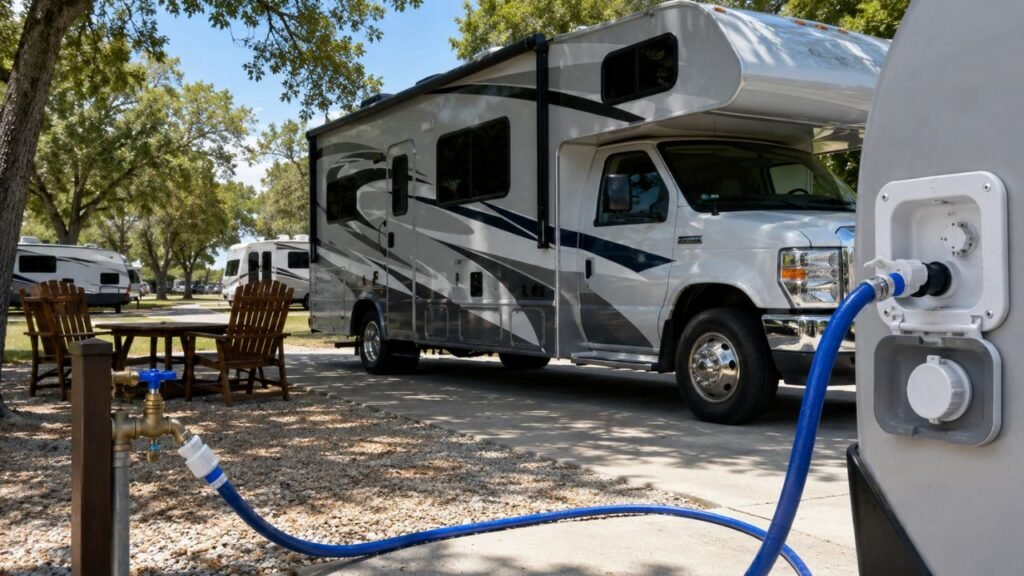
For campground water:
- Use a drinking-water-safe hose.
- Install a suitable pressure regulator.
- Check connections for leaks.
- Avoid leaving weak fittings under excessive pressure.
For sewer connections:
- Wear disposable gloves.
- Secure both hose ends.
- Use a hose support when needed.
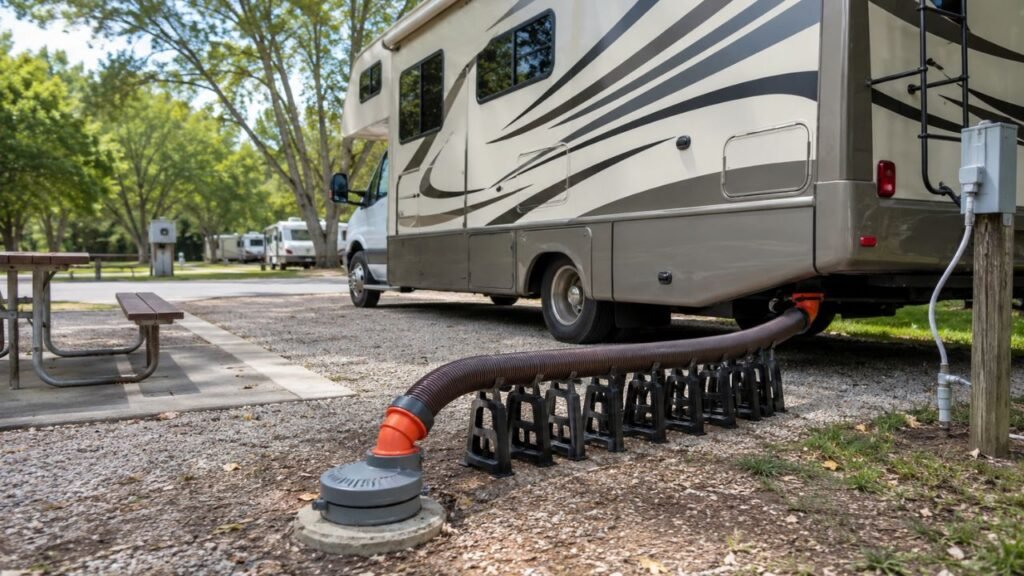
- Keep tank valves closed until dumping.
- Wash your hands afterward.
Travel Trailer and Fifth-Wheel Maintenance Schedule
Regular maintenance prevents small problems from becoming expensive repairs. Use this schedule as a general framework, then follow each component manual.
| Interval | Recommended Maintenance |
| Before every tow | Inspect tires, wheels, hitch, brakes, lights, jacks, doors, cargo, and breakaway system |
| After wheel removal | Recheck wheel fasteners according to wheel and axle instructions |
| Monthly during use | Inspect batteries, seals, plumbing, detectors, hitch parts, and slide mechanisms |
| Every 3–6 months | Inspect roof sealant, suspension, underbelly, brake wiring, awning, and exterior openings |
| Seasonally | Sanitize water system, inspect appliances, service batteries, clean roof, and test safety equipment |
| Annually | Arrange detailed brake, bearing, suspension, propane, roof, and structural inspections |
| Before storage | Clean, dry, winterize, protect batteries, seal openings, and prevent pests |
| After storage | Inspect tires, brakes, plumbing, batteries, propane, hitch, seals, and appliances |
Maintenance intervals change with mileage, climate, storage, road conditions, and component design.
A trailer used monthly may need service sooner than one stored indoors. However, long storage periods can create their own problems.
Maintain the Trailer Tires and Wheels
Trailer tires carry heavy loads and often sit unused for long periods. Pressure, age, heat, and loading all affect their condition.
Check Tire Pressure Before Travel
Check trailer tire pressure when the tires are cold.
Use the pressure specified by the trailer or tire manufacturer. Do not copy the tow vehicle’s pressure.
Pressure rises as tires heat during travel. Avoid releasing air from a normally heated tire.
Check the spare tire as well. A flat spare offers no help during an emergency.
Inspect Tread and Sidewalls
Inspect every tire before travel.
Look for:
- Cracks
- Bulges
- Cuts
- Punctures
- Flat spots
- Uneven wear
- Exposed cords
- Embedded objects
- Weather damage
Uneven wear can indicate alignment, suspension, bearing, inflation, or loading problems.
Replace any tire showing structural damage. Tread depth alone does not determine trailer tire safety.
Check Tire Age
Find the date code printed on each tire.
The code identifies the week and year of manufacture. For example, 2425 represents the twenty-fourth week of 2025.
Age matters because rubber deteriorates over time. Sunlight, heat, storage, and underinflation can accelerate that deterioration.
Follow the tire manufacturer’s inspection and replacement guidance. Replace tires sooner when damage or deterioration appears.
Inspect and Tighten Wheel Fasteners
Wheel fasteners must be tightened to the correct specification.
Use:
- The specified torque
- A calibrated torque wrench
- The correct tightening sequence
- Clean and suitable wheel hardware
Recheck fasteners after wheel removal or installation. Follow the wheel and axle manufacturer’s exact procedure.
Do not guess torque based on another trailer. Wheel designs and stud sizes vary.
Maintain the Spare Tire
Inspect the spare whenever you inspect the road tires.
Confirm:
- Proper pressure
- Acceptable age
- Secure mounting
- Easy accessibility
- No sidewall damage
- Correct wheel fitment
Carry a jack and tools rated for your trailer. Confirm you know the approved lifting points before an emergency.
Maintain the Wheel Bearings, Brakes, and Suspension
The running gear supports the trailer throughout every mile. Bearing, brake, or suspension failures can quickly become dangerous.
Service the Wheel Bearings
Wheel bearings require inspection and lubrication at manufacturer-defined intervals.
During service, inspect:
- Bearing surfaces
- Grease condition
- Grease seals
- Spindle condition
- Hub condition
- Bearing adjustment
- Brake contamination
Watch for warning signs between services:
- Hot hubs
- Grinding sounds
- Excessive wheel play
- Grease around the wheel
- Uneven braking
- Repeated seal leakage
Do not touch a suspected hot hub directly. Compare temperatures carefully without burning yourself.
Inspect the Trailer Brakes
Trailer brakes must operate smoothly and evenly.
Inspect:
- Brake shoes or pads
- Drums or rotors
- Electric magnets
- Wiring
- Connectors
- Adjusters
- Hydraulic lines when fitted
Possible brake problems include:
- Weak stopping
- Pulling to one side
- Wheel lockup
- Delayed response
- Overheated wheels
- Controller fault messages
- Intermittent braking
Test controller gain whenever trailer weight changes significantly. A heavily loaded trailer may require a different setting.
Test the Breakaway System
The breakaway system must apply the trailer brakes independently.
Check the battery’s charge and physical condition. Inspect the switch, cable, wiring, and mounting point.
Test the system according to its manufacturer’s procedure. Do not leave the breakaway pin removed longer than instructed.
Inspect the Axles and Suspension
Look beneath the trailer regularly.
Inspect for:
- Bent axle tubes
- Cracked leaf springs
- Broken spring leaves
- Worn shackles
- Loose bolts
- Damaged equalizers
- Worn bushings
- Leaking shock absorbers
- Broken welds
- Uneven tire clearance
Repeated uneven tire wear deserves professional inspection. Replacing tires alone will not correct a suspension problem.
Maintain the Hitch and Coupling Components
The hitch carries continuous forces from acceleration, braking, turning, and bumps. Clean and inspect it before serious wear develops.
Travel Trailer Hitch Maintenance
Inspect the complete travel-trailer hitch system.
Check:
- Hitch-ball wear
- Coupler wear
- Latch movement
- Coupler adjustment
- Receiver corrosion
- Receiver mounting bolts
- Safety chains
- Chain attachment points
- Spring bars
- Sway-control components
- Hitch pins and clips
Lubricate the hitch ball and moving parts when recommended. Some friction sway components must remain dry, so read their instructions carefully.
Replace bent, cracked, or badly worn parts. Do not straighten critical hitch components for reuse.
Fifth-Wheel Hitch Maintenance
Fifth-wheel hitches contain several moving and load-bearing parts.
Inspect:
- Hitch jaws
- Locking handle
- Safety pin
- Pivot points
- Hitch plate
- Kingpin
- Mounting rails
- Factory pucks
- Bed mounting hardware
- Slider mechanism
Use the lubricant or plate specified by the hitch manufacturer. Too little lubrication increases wear and binding.
Too much unsuitable grease can collect dirt and debris. Clean old buildup before adding fresh lubricant.
Watch for Unusual Movement or Noise
Some hitch movement and noise can occur during towing. However, new or worsening sounds deserve attention.
Investigate:
- Heavy clunking
- Binding
- Uneven movement
- Difficult locking
- Excessive chucking
- Loose mounting hardware
- Visible hitch movement
- Metal shavings
Stop towing when a structural hitch problem is suspected. A failed connection can separate the trailer from the vehicle.
Prevent Roof Leaks and Structural Damage
Water intrusion can damage walls, flooring, insulation, cabinetry, and framing. Frequent seal inspections cost much less than structural repairs.
Inspect the Roof and Sealant
Inspect the roof several times each year and after severe weather.
Check around:
- Roof vents
- Skylights
- Air conditioners
- Antennas
- Solar-panel mounts
- Plumbing vents
- Ladder mounts
- Roof edges
- Front and rear caps
- Roof seams
Look for cracked, lifted, missing, or shrinking sealant. Also inspect for membrane punctures, loose fixtures, and soft areas.
Only walk on the roof when the manufacturer allows it. Use a safe ladder and avoid wet surfaces.
Inspect Windows, Doors, and Exterior Openings
Water can enter far below the roofline.
Inspect:
- Windows
- Entry doors
- Storage doors
- Marker lights
- Exterior speakers
- Utility ports
- Water connections
- Slide openings
- Trim strips
- Corner moldings
- Exterior fixtures
Pay attention to loose screws and cracked sealant. Water can travel behind the wall before becoming visible inside.
Use Compatible Repair Materials
Do not cover every leak with household caulk.
Roof membranes and exterior seams require compatible products. The wrong sealant may fail, damage surfaces, or prevent future repairs.
Identify the roof material before selecting a product. Clean and prepare the area using the manufacturer’s procedure.
Remove failed material only when appropriate. Avoid damaging the membrane while scraping.
Look for Early Water-Damage Signs
Inspect the interior for early warnings.
Common signs include:
- Musty odors
- Wall stains
- Soft flooring
- Swollen wood
- Loose trim
- Bubbling wall panels
- Peeling surfaces
- Mold growth
- Delamination
- Damp storage areas
Investigate the source immediately. Drying the visible area does not stop continuing water entry.
Inspect the Frame and Underbelly
Look beneath the trailer for structural and plumbing problems.
Check for:
- Frame corrosion
- Cracked welds
- Bent supports
- Loose underbelly panels
- Damaged insulation
- Leaking tanks
- Hanging wiring
- Broken brackets
- Impact damage
Surface rust can often be managed early. Deep scaling, cracks, or distortion require professional evaluation.
Maintain Slides, Awnings, and Stabilizers
Slides, awnings, and jacks contain moving parts exposed to dirt and weather. Regular inspection reduces binding, leaks, and motor strain.
Slide-Out Maintenance
Inspect slide roofs and seals before retracting.
Remove leaves, branches, ice, and standing water. Debris can damage seals or enter the RV.
Check:
- Inner and outer seals
- Slide roof condition
- Sidewall alignment
- Roller condition
- Gear or cable movement
- Hydraulic leaks
- Motor sounds
- Manual override access
Use only approved lubricants. Spraying random oil onto seals or gears may attract dirt or damage rubber.
Operate slides while the RV is properly leveled unless instructed otherwise. Stop when movement becomes uneven or unusually noisy.
Awning Maintenance
Allow the awning fabric to dry before long-term storage.
Inspect:
- Fabric tears
- Mold
- Stains
- Roller alignment
- Arm hardware
- Motor operation
- Manual controls
- Mounting brackets
Retract the awning before strong winds develop. Never leave it unattended during unstable weather.
Clean the fabric with an approved product. Harsh cleaners can weaken coatings and stitching.
Landing Gear and Stabilizer Maintenance
Keep landing gear, tongue jacks, and stabilizers clean.
Inspect:
- Leg tubes
- Foot pads
- Mounting bolts
- Electrical connections
- Motors
- Switches
- Hydraulic lines
- Manual overrides
Lubricate only the points specified by the manufacturer. Protect electrical connections from corrosion and water.
Never exceed a jack’s rated capacity. Stabilizer jacks normally support movement control, not trailer lifting.
Maintain the Electrical, Plumbing, and Propane Systems
A towable RV contains several residential-style systems in a moving structure. Inspect them regularly for vibration damage, leaks, and loose connections.
Battery and Charging-System Maintenance
Identify your battery chemistry before servicing it.
Common RV batteries include:
- Flooded lead-acid
- AGM
- Gel
- Lithium iron phosphate
Each chemistry needs compatible charging settings.
Inspect:
- Battery terminals
- Cable tightness
- Corrosion
- Case damage
- State of charge
- Mounting security
- Ventilation
- Charger operation
Check electrolyte only in serviceable flooded batteries. Never open a sealed battery.
Avoid storing batteries in a deeply discharged state. Follow chemistry-specific temperature and charging guidance.
Freshwater and Waste-System Maintenance
Inspect the plumbing system for leaks and odors.
Check:
- Water pump
- Faucet connections
- Toilet seal
- Water heater
- Low-point drains
- Tank valves
- Sewer fittings
- Exterior water connections
- Tank supports
Sanitize the freshwater system periodically. Use the correct procedure and concentration for your RV.
Flush waste tanks appropriately. Avoid products that can damage seals or interfere with campground systems.
Winterize the plumbing whenever freezing temperatures can occur. Trapped water may crack fittings, valves, pumps, and appliances.
Propane-System Maintenance
Propane leaks can create fire, explosion, and suffocation hazards.
Inspect:
- Cylinders
- Regulators
- Hoses
- Pigtails
- Mounting hardware
- Appliance connections
- Detector operation
Never search for a propane leak using a flame.
Close the propane supply when a leak is suspected. Ventilate the RV and arrange qualified inspection.
Have the system pressure-tested as recommended. Replace damaged or expired components according to applicable requirements.
Appliance Maintenance
Each appliance has its own cleaning and service needs.
Inspect the:
- Refrigerator
- Furnace
- Air conditioner
- Water heater
- Cooking appliances
- Ventilation fans
- Microwave
- Fireplace when fitted
Keep exterior vents clear of nests, debris, and damage. Stop using any appliance showing soot, overheating, unusual smells, or repeated shutdowns.
How to Store a Travel Trailer or Fifth Wheel
Correct storage protects the trailer from moisture, pests, tire damage, freezing, and battery failure. Start preparing before the final travel day.
Prepare the Exterior
Clean and dry the RV before storage.
Complete these tasks:
- Wash the roof and sidewalls.
- Inspect every exterior seal.
- Repair active leaks.
- Dry and retract the awning.
- Close windows and roof vents.
- Lock storage compartments.
- Seal pest entry points safely.
- Remove food and trash.
- Inspect the underbelly.
- Check drainage around the parking area.
Use a breathable, properly fitted RV cover when suitable. Avoid tarps that trap moisture or rub against painted surfaces.
Protect the Tires and Chassis
Park on a firm, well-drained surface.
Check tire pressure before storage. Avoid leaving tires in mud, standing water, or petroleum products.
Use tire covers when the trailer receives strong sunlight. Confirm covers do not trap moisture against the tires.
Do not lift the trailer using stabilizers. Follow the manufacturer’s storage instructions for long-term tire unloading.
Protect the Batteries
Charge the batteries before storage.
Choose the correct approach for the battery chemistry and storage temperature. Some batteries remain connected to a compatible maintainer.
Others should be disconnected or removed. Check stored batteries periodically rather than forgetting them for months.
Turn off unnecessary parasitic loads. Detectors, control boards, and radios can slowly discharge a battery.
Winterize the Plumbing System
Drain and winterize the plumbing before freezing weather.
The process may include:
- Draining freshwater
- Emptying holding tanks
- Bypassing the water heater
- Draining the water heater
- Clearing water lines
- Adding approved RV antifreeze
- Protecting traps and valves
Follow the RV and appliance manuals. Water heaters, filters, washing machines, and ice makers may need separate steps.
Prepare the Interior
Leave the interior clean and dry.
- Remove food.
- Clean the refrigerator.
- Leave refrigerator doors safely open.
- Remove trash.
- Clean sinks and drains.
- Control interior moisture.
- Protect fabrics from dampness.
- Close blinds when appropriate.
- Secure drawers and doors.
- Check for pests periodically.
Visit the trailer during storage. Early detection can prevent months of hidden damage.
Common Towing and Maintenance Mistakes
Many expensive problems begin with small shortcuts. Avoid these common towing and maintenance mistakes.
- Using tow capacity as the only limit: Payload or rear axle capacity may run out first.
- Planning with dry weight: The trailer becomes heavier after normal supplies are added.
- Guessing tongue weight: Actual tongue weight should be measured whenever possible.
- Ignoring pin weight: Fifth-wheel pin weight can consume truck payload quickly.
- Loading cargo behind the axles: Rear-heavy loading can increase dangerous sway.
- Using underrated hitch parts: Every component must handle the actual loaded weight.
- Skipping the fifth-wheel pull test: Visual inspection alone may miss an improper connection.
- Attaching the breakaway cable incorrectly: It must activate if the trailer separates.
- Leaving jacks extended: A forgotten jack can bend, break, or damage the frame.
- Towing with underinflated tires: Low pressure creates heat and increases tire failure risk.
- Ignoring unusual tire wear: It may reveal bearing, axle, or suspension problems.
- Driving too fast: Speed reduces reaction time and makes instability harder to control.
- Riding brakes downhill: Continuous braking can cause heat buildup and brake fade.
- Using stabilizers for leveling: Stabilizer jacks may bend or twist the trailer.
- Applying incompatible sealant: The wrong product may fail or damage the roof.
- Delaying leak repairs: Water damage often spreads beyond the visible stain.
- Skipping component manuals: Generic advice cannot replace model-specific instructions.
- Neglecting stored trailers: Tires, batteries, seals, and pests still need attention.
When Should You Stop Towing and Call a Professional?
Some problems require more than a roadside adjustment. Continuing to tow can worsen damage or create an immediate safety hazard.
Stop and arrange professional help when you notice:
- Repeated or violent trailer sway
- Weak or failed trailer brakes
- A brake controller that loses connection
- Smoke or burning smells
- Overheated hubs or wheels
- Cracked hitch components
- A damaged coupler or kingpin
- Loose fifth-wheel mounting rails
- A bent axle
- Broken leaf springs
- Rapid or severe tire wear
- A bulging or damaged tire
- Frame cracks
- Broken structural welds
- Major water intrusion
- Propane odors
- Melted wiring
- Electrical arcing
- Exceeded weight ratings
Do not let schedule pressure influence the decision. A delayed trip is safer than towing a damaged trailer.
Keep a Towing and Maintenance Log
A maintenance log helps you recognize patterns before they become serious problems.
Record each inspection, repair, replacement, and adjustment. Include the date, mileage, location, product used, and work completed.
Useful records include:
- Public scale results
- Loaded axle weights
- Tongue or pin weight
- Tire pressures
- Tire installation dates
- Wheel fastener checks
- Bearing service
- Brake service
- Hitch adjustments
- Roof inspections
- Sealant repairs
- Battery tests
- Appliance service
- Propane inspections
- Winterization dates
Take photos of labels, scale tickets, tire codes, hitch settings, and repaired seams. These images can help during future troubleshooting.
Keep manuals and receipts together. Good records also help a technician understand the RV’s maintenance history.
Is a Travel Trailer or Fifth Wheel Easier to Tow and Maintain?
A fifth wheel often feels more stable because the hitch sits inside the truck bed. The connection position can reduce some movement experienced with rear-hitched trailers.
A travel trailer preserves truck-bed space and works with more vehicle types. However, tongue weight, weight distribution, and sway control may need closer adjustment.
Maintenance requirements are similar for both designs. Both need tire, brake, bearing, roof, seal, battery, plumbing, and appliance care.
The better option depends on your truck, payload, storage needs, trailer size, campsite preferences, and driving comfort. Choose the setup you can safely tow, inspect, and maintain.
Final Thoughts
Learning how to tow and maintain a travel trailer or fifth wheel begins with accurate weights and properly matched equipment. A powerful truck cannot compensate for overloaded axles, incorrect hitching, poor loading, or neglected trailer brakes.
Use a consistent checklist, drive patiently, and inspect the trailer regularly. Small maintenance tasks protect your RV, tow vehicle, passengers, and everyone sharing the road.
Related FAQs
Can an SUV Tow a Travel Trailer?
Many SUVs can tow smaller travel trailers when properly equipped. Check towing capacity, payload, axle ratings, receiver limits, frontal-area limits, and loaded trailer weight. You may also need trailer brakes, a brake controller, weight distribution, and upgraded mirrors. Never select a trailer using advertised tow capacity alone.
Do I Need a Weight-Distribution Hitch?
You may need a weight-distribution hitch when required by the vehicle, receiver, or trailer manufacturer. It can also help when tongue weight causes rear sag or reduced steering control. The system must match the loaded tongue weight and be adjusted correctly. It should not be used to hide overloading.
Why Does My Travel Trailer Sway?
Trailer sway can result from excessive speed, insufficient tongue weight, rear-heavy cargo, crosswinds, passing trucks, worn tires, or poor hitch adjustment. Slow down gradually and inspect the setup. Repeated sway indicates a loading, equipment, tire, suspension, or driving problem that must be corrected.
How Much Pin Weight Does a Fifth Wheel Add?
Fifth-wheel pin weight often equals roughly 15% to 25% of the loaded trailer weight. The actual amount varies with design and cargo placement. Pin weight counts against the truck’s payload and rear axle capacity. Weigh the loaded combination instead of relying only on brochure estimates.
Can I Tow a Fifth Wheel With a Short-Bed Truck?
Some short-bed trucks can tow fifth wheels with enough payload and suitable equipment. You may need a sliding hitch or specialized pin box for cab clearance. Compatibility varies by truck, trailer, hitch, and bed length. Confirm approval and turning clearance before towing.
How Often Should Trailer Wheel Bearings Be Serviced?
Wheel-bearing service intervals depend on the axle, hub design, mileage, storage, and operating conditions. Follow the axle manufacturer’s schedule rather than one universal interval. Inspect sooner after water exposure, overheating, seal leakage, unusual wheel play, or long periods of storage.
Should I Tow With the Freshwater Tank Full?
You can tow with freshwater when the tank and trailer are designed for it. However, water adds about 8.3 pounds per gallon. Confirm axle, trailer, and tow-vehicle ratings before filling. Tank location and support also matter. Carry only the amount your trip reasonably requires.
Can Passengers Ride Inside a Travel Trailer or Fifth Wheel?
Riding inside a towable RV can be dangerous because seating may lack proper restraints and communication. Laws also vary between locations. Check applicable regulations and manufacturer guidance before travel. The safest choice is generally placing passengers inside the properly restrained tow vehicle.
How Fast Should You Tow a Travel Trailer?
Tow within posted limits, tire speed ratings, and manufacturer instructions. Reduce speed further for wind, rain, traffic, steep grades, or poor road conditions. A trailer becomes harder to control as speed increases. Choose a speed that allows smooth steering, braking, and emergency response.
Do Travel Trailers and Fifth Wheels Need Annual Inspections?
Most towable RVs benefit from a detailed annual inspection. Usage, mileage, storage, climate, and component instructions may require more frequent service. Important areas include brakes, bearings, tires, suspension, propane, roof seals, batteries, plumbing, and the complete hitch system.

David Marshall shares travel route insights, mileage planning tips, and road-tested advice. His writing helps travelers understand distance, timing, and equipment choices. Every article is built around clarity and real-world usefulness.